I write posts in my head all the time, so I was astonished to find just now that I have not published one since a year ago. The ones I write in my head are often fun and potentially helpful in gaining perspective, but if I don’t sit down and pound out my thoughts, considering, editing, sometimes changing my mind about what feels important, I don’t get the grounding I sorely need. So I’m back.
We have been in Flagstaff since mid-May. I realize that I am not a different person up here –what a relief that would be! — but there’s something about the mountain air, the long vistas, the shift from my Phoenix set of commitments to the set in Flagstaff, that unwinds me. I’m feeling much more settled here. I wish I could say that in my leisure time, I have figured out how to address the heartbreaking state of the world. I haven’t, but failing that, I have been learning the calming effect of simply noticing what’s around me.
Since we are returning to Phoenix in two days, I don’t have the time to linger over the composition of this post, letting it develop over a few days. I enjoy writing like that, but the time it takes keeps me from writing as often as I’d like. Age is making me less perfectionistic, I guess.
So, as my mother used to say, I need to “get on the stick.” Now that I recall that, it sounds like very strange advice. I almost thought I made it up, but AI tells me (with no mention of my mother as the coiner of the phrase) that it means “to start working hard, get busy, or take action immediately.” Where did the phrase come from? Cassell’s Dictionary of Slang says it is derived from the shorter phrase “on the stick” (never heard that) and that “The stick represents the gearstick of a car or joystick of an aircraft, both of which exert control.”
[This little diversion into wondering about a phrase illustrates my difficulty in getting on the stick. There’s always something to wonder about and investigate. Enough. To the stick!]
Bader Road
When we were looking for a house in Flagstaff, Richard’s first priority was to be near a golf course. Mine was to have immediate access to fun places to walk, possibly with a coffee shop as a destination. Neither of us got our wish. Our house is seven miles from Flagstaff on Highway 180, the road that leads to the south entrance of the Grand Canyon, which is about 70 miles away. Our house is northwest of Flagstaff; the golf courses are about a half hour away. A walk to a coffee shop would entail walking on the shoulder of Highway 180 for about seven miles, generally downhill — but then, I would need to get back home as well.
The first summer we were up here, I had just had my second knee replacement, so wasn’t looking for a walking route. The next year, I told myself that since there was nowhere to walk, I just wouldn’t. (Physical exercise has only ever been a priority for me in short spurts.) Last year, determined to overcome my aversion to moving my body, I once tried walking on Bader Rd, which is on a prairie across the highway from us. Unsurprisingly, I found reasons that it did not suit me — namely, there was no shade and it was boring. For a month or two, I walked almost daily on Roundtree Rd, which, like our property, is on the forested side of the highway. It was a slog. It has plenty of shade from the trees, but it’s unpaved and uphill. More strenuous and trickier footing than I was comfortable with.
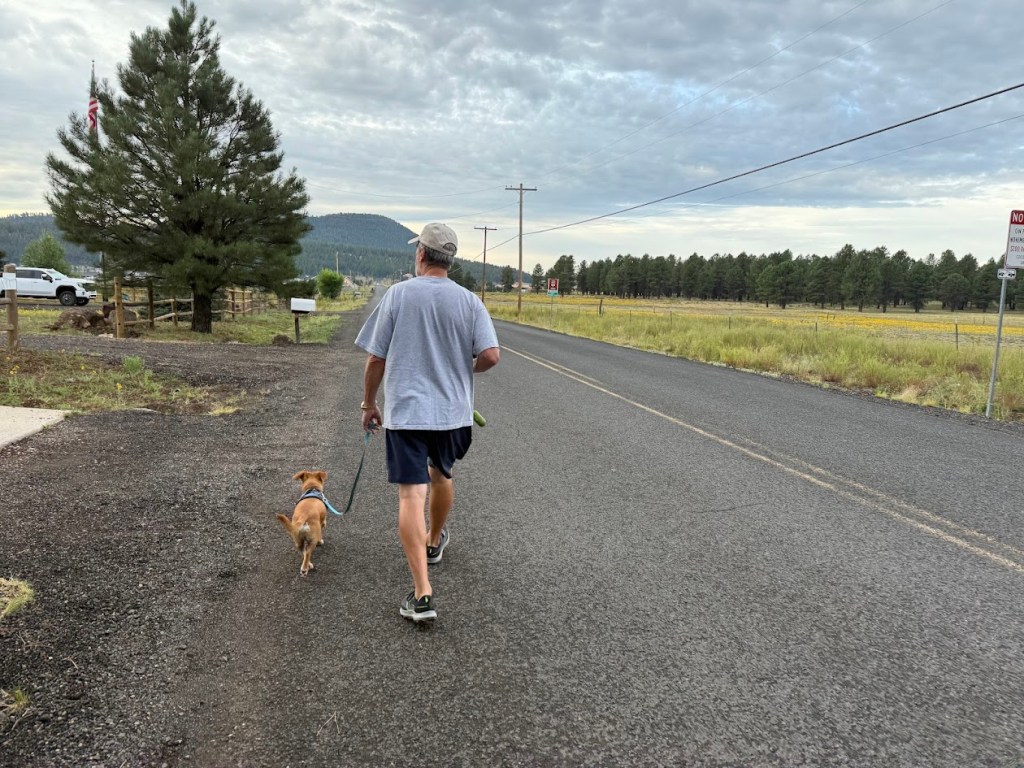
This summer started with a cruise to Norway, Scotland and England. (I started a post about that trip, but didn’t finish it. If you’re interested in hearing about it, let me know and I’ll forward you a brief email with a few photos that I sent my siblings when we got home.) Shortly after getting back from that trip, we flew to Portland OR for a few days with our daughter Katie. So our time in Flagstaff really began in late July. I was suddenly inspired to try walking on Bader Road again, this time in the dawn cool. Richard decided to join, bringing Mac along. It has become a daily ritual.
What I used to think of as a “boring, shadeless walk” has turned out to be a highlight of the summer. Leaving at 6:30 or 7:00 a.m. is not only cooler, but stepping out into mountain air when the world is just waking up is exhilarating. It’s October now, and I still walk in shirtsleeves unless the temperature is below 45. My body becomes a furnace once I’m moving.
The sky alone is scenic here. We have good clouds in Phoenix, too, but these seem more interesting and dramatic. I guess I’ll have a chance to compare in the months to come.
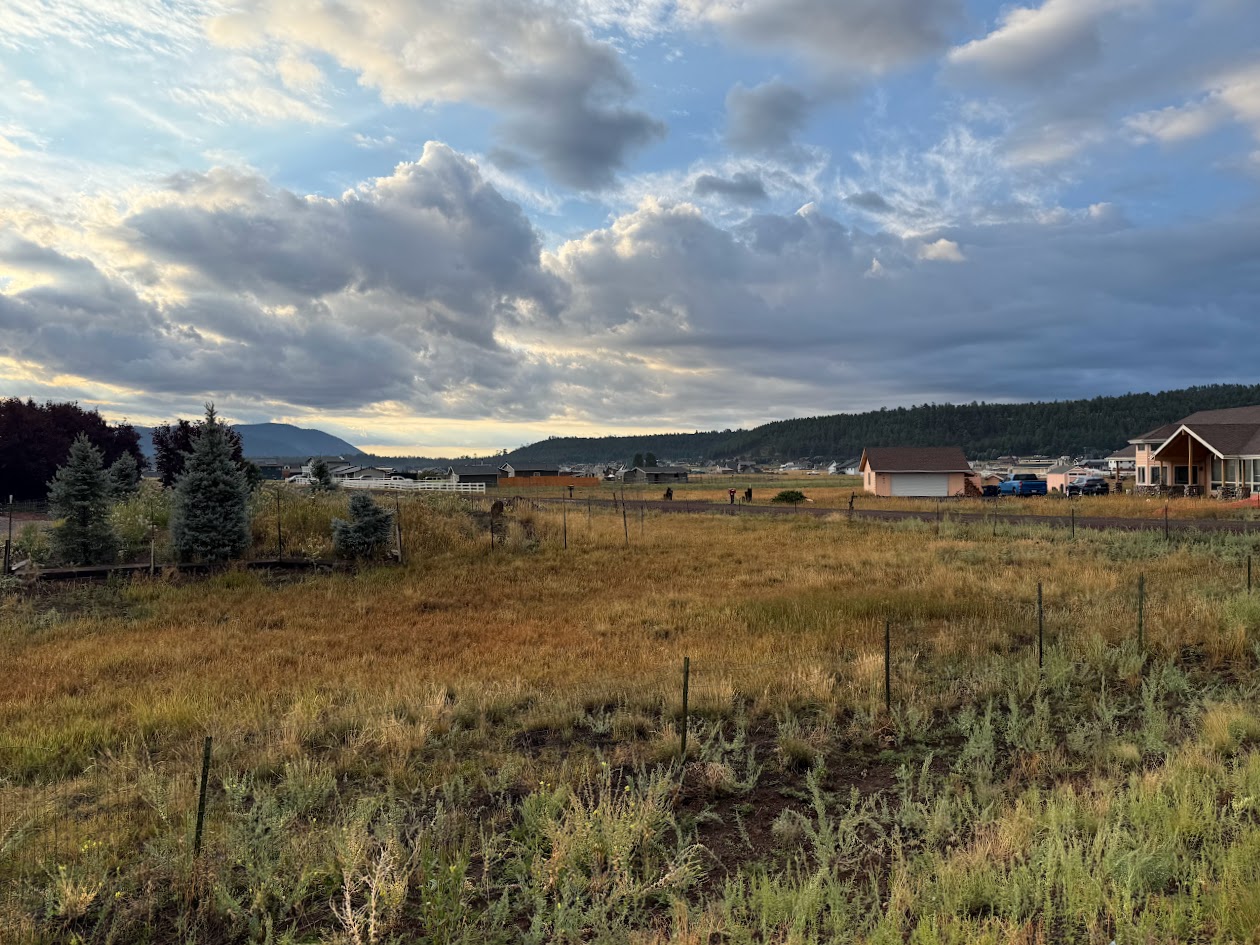

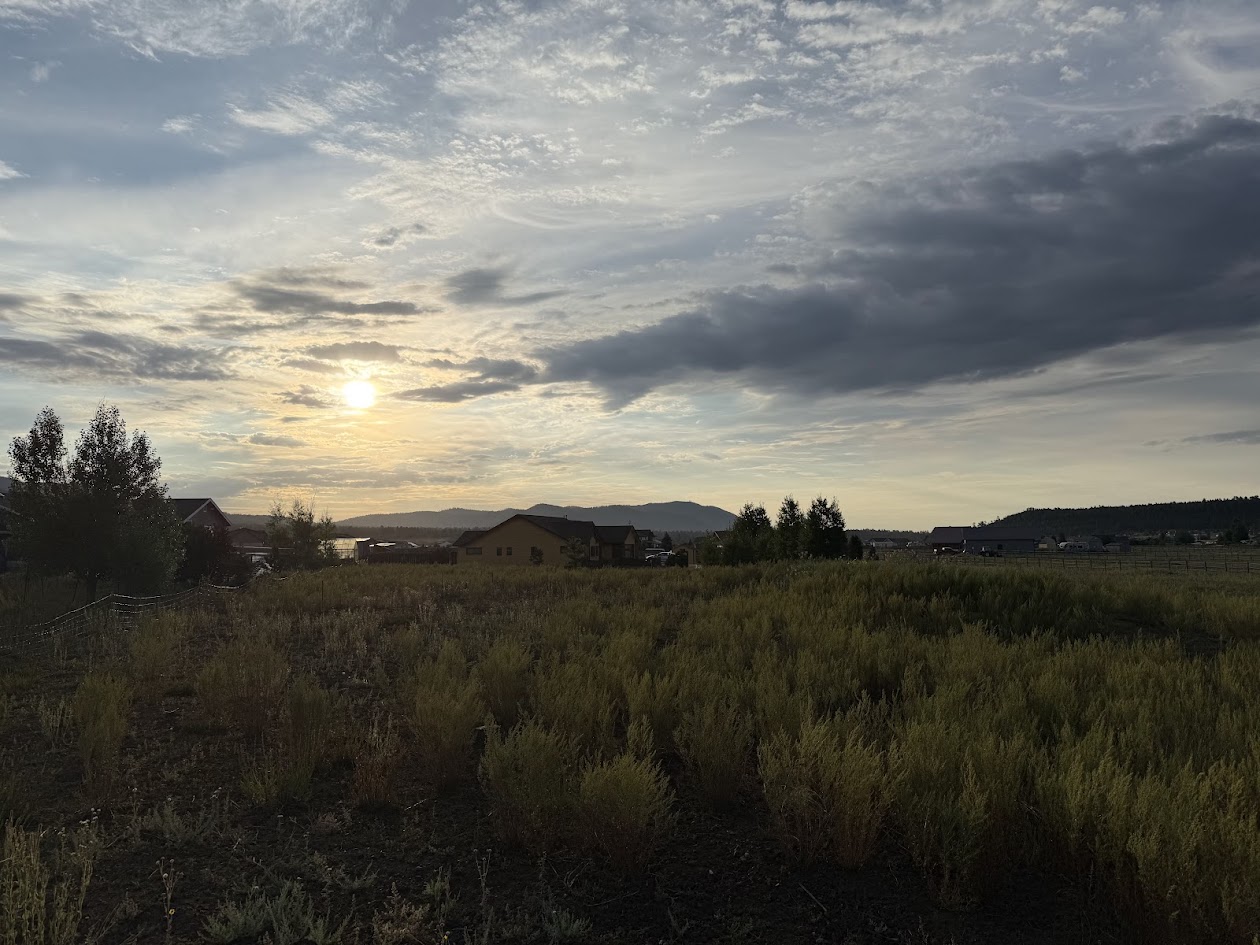
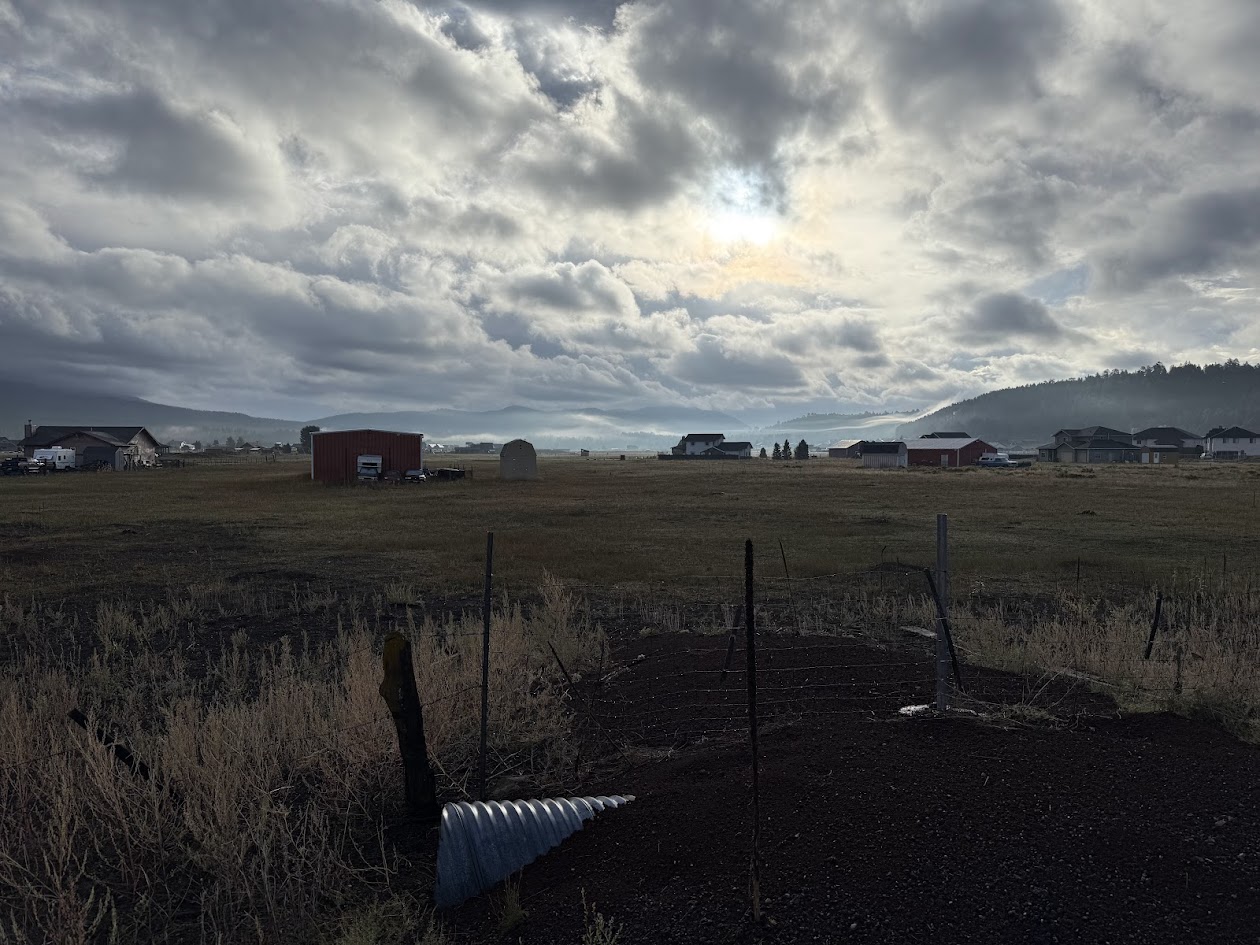
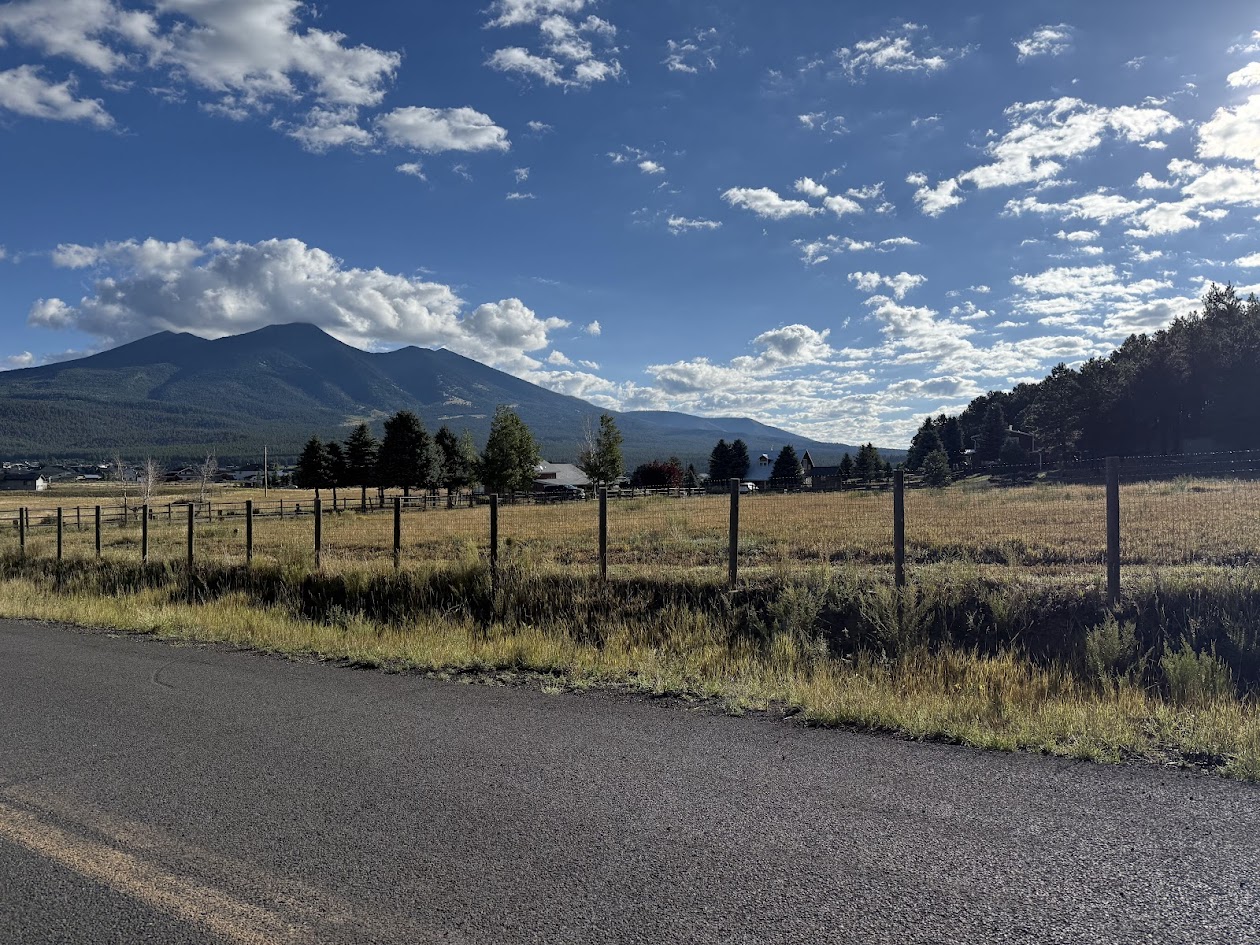
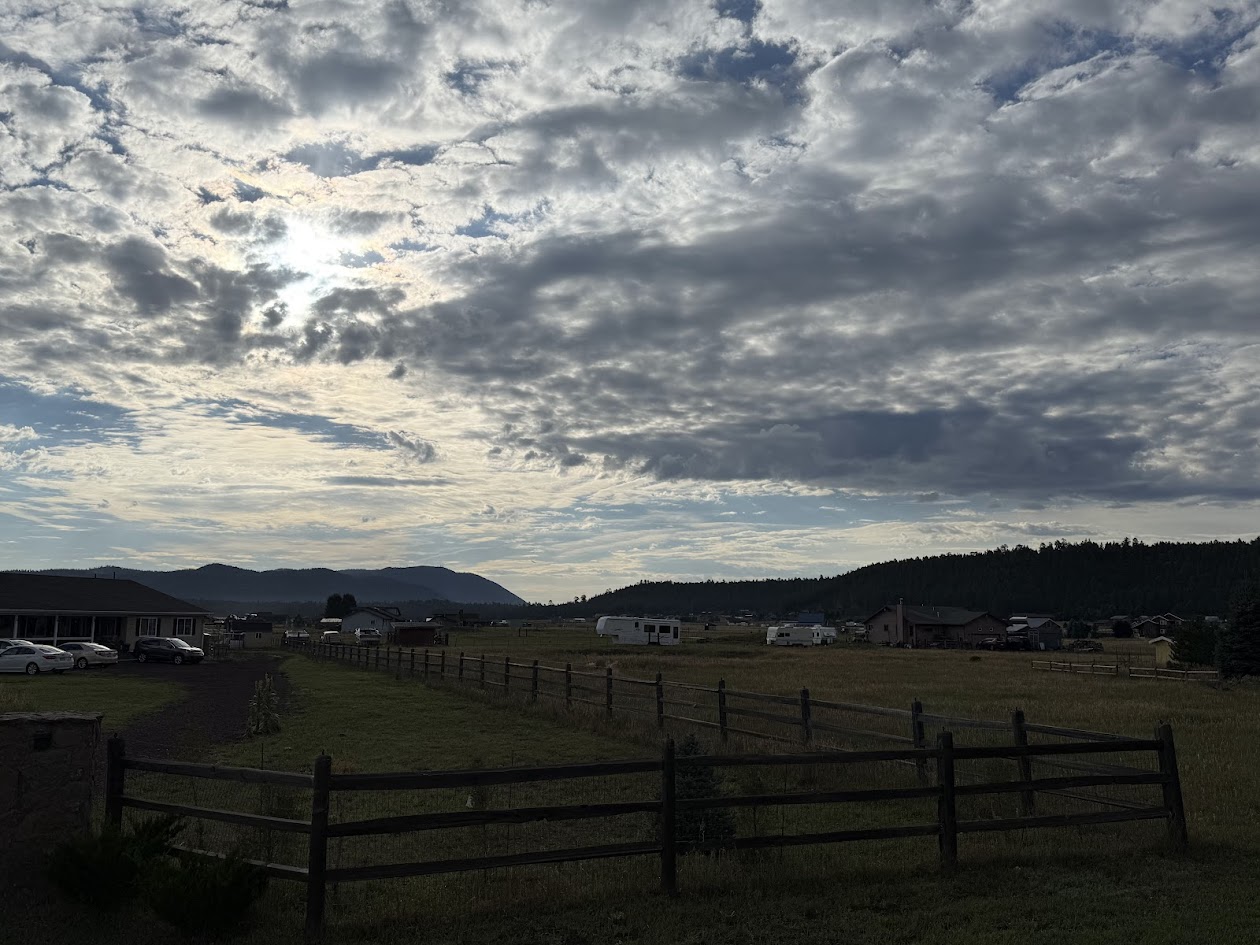
When we set out on our walk, we are heading south, away from the San Francisco Peaks towards a small, double-mounded mountain called A-1.
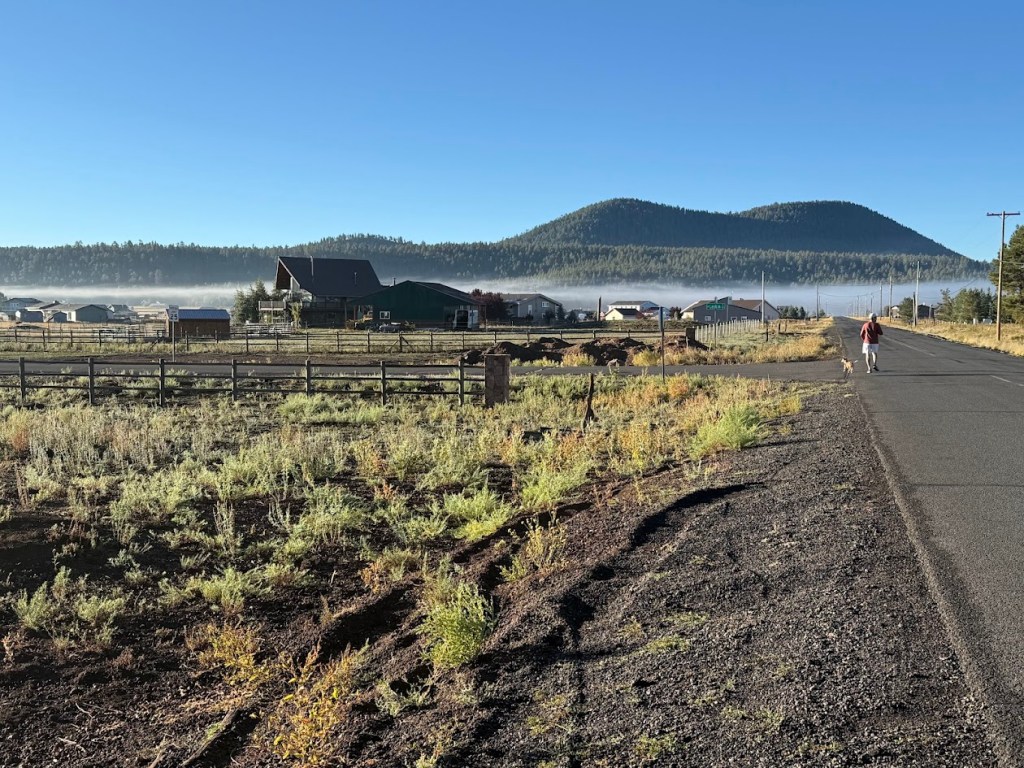
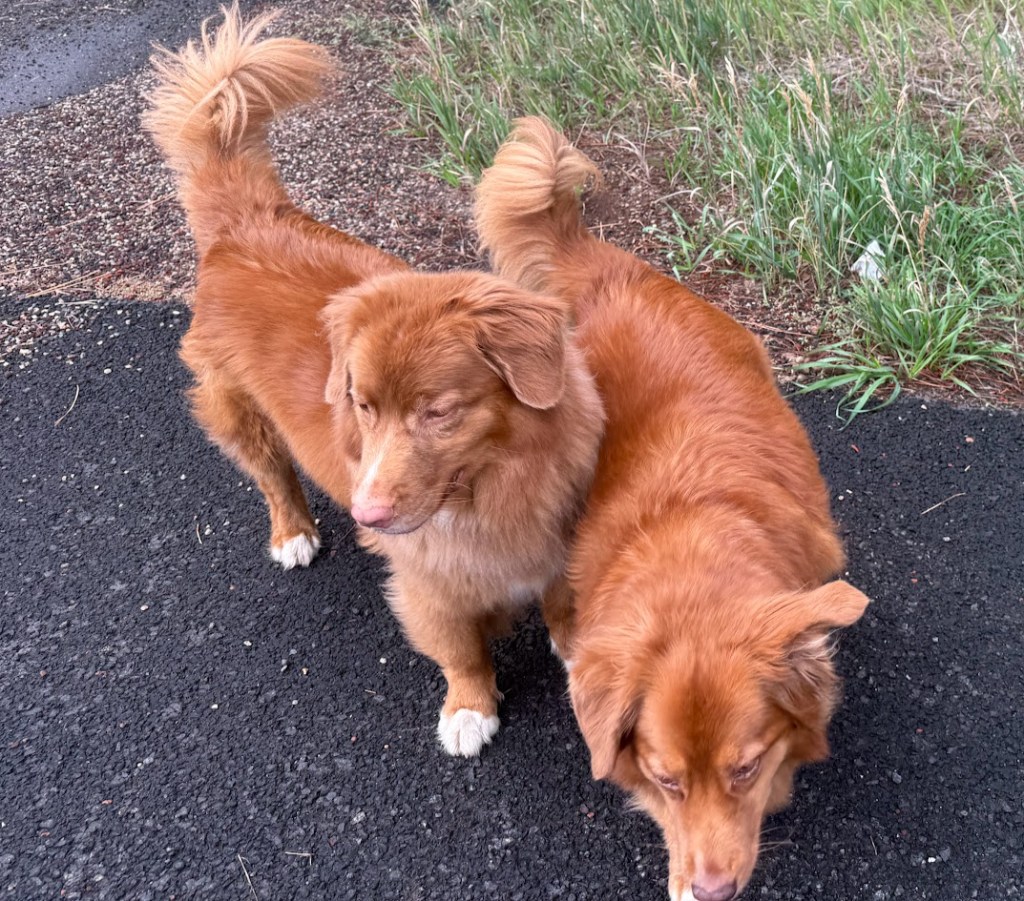
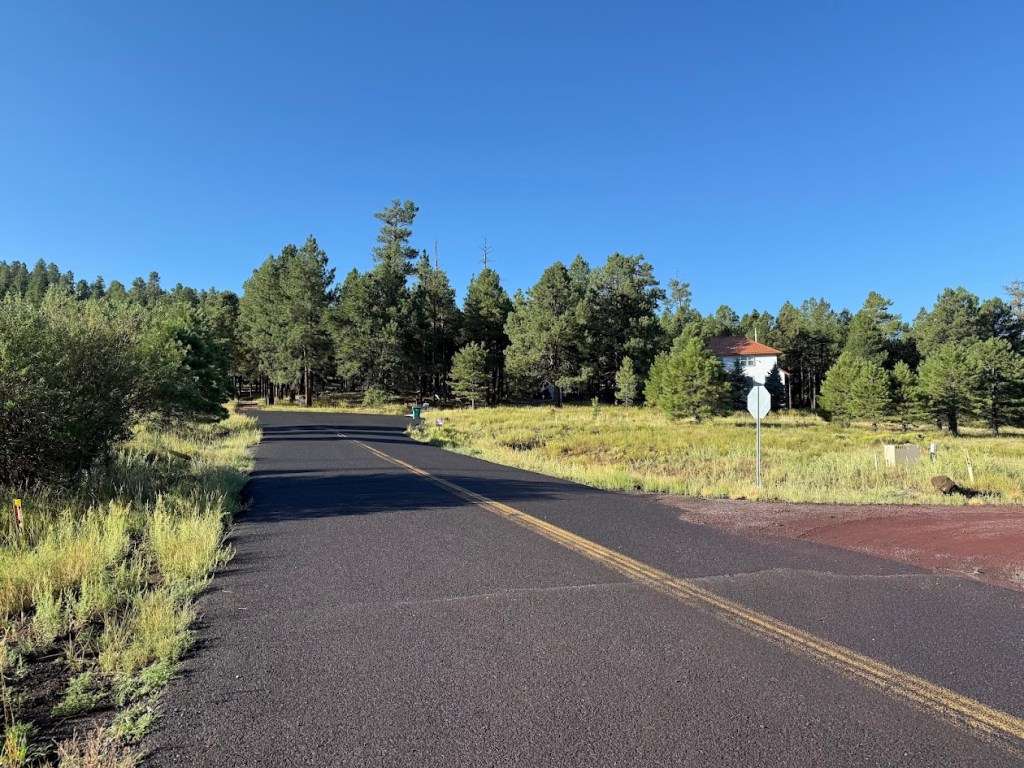
The cul-de-sac at the end of Bader Rd slopes up to the white house you can see below. A neighbor of the house’s owner says that he (the owner) is protective, possibly to the point of paranoia, coming out with a gun if he suspects trespassers. I managed to ingratiate myself to him one morning when his two beautiful Nova Scotia retrievers got out and started following me home. One of them turned around and headed home after a bit, but the other one stuck with me until I finally turned around to take him back. The owner was just then coming out to look for him. He was very grateful to me, so if we meet again, I hope he recognizes me before he shoots me.
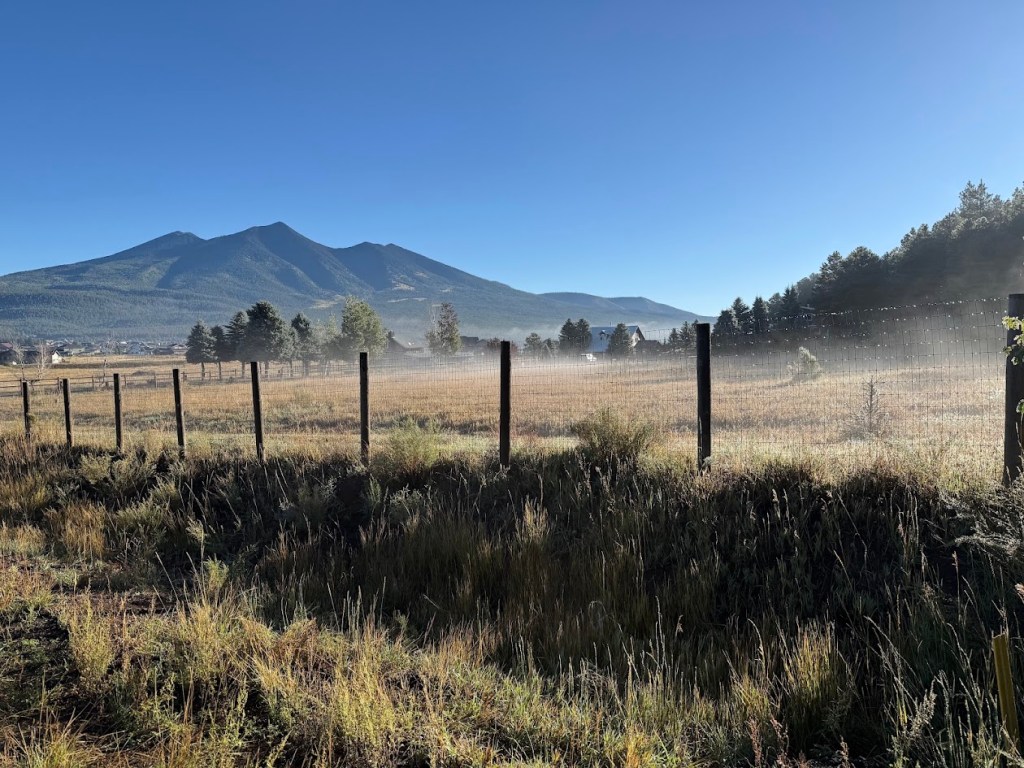
To come home, we go back north, with the San Francisco Peaks on the horizon. I am not clear on which peaks are which. The Museum of Northern AZ, which is on the road back to Flagstaff and well worth visiting, has a relief map that shows that they are a chain of peaks that include Agassiz, Humphreys, Fremont and three smaller ones. I took this photo walking back home on a dewy morning recently, when everything was sparkling. Dewdrops in the morning light are the only diamonds that appeal to me.
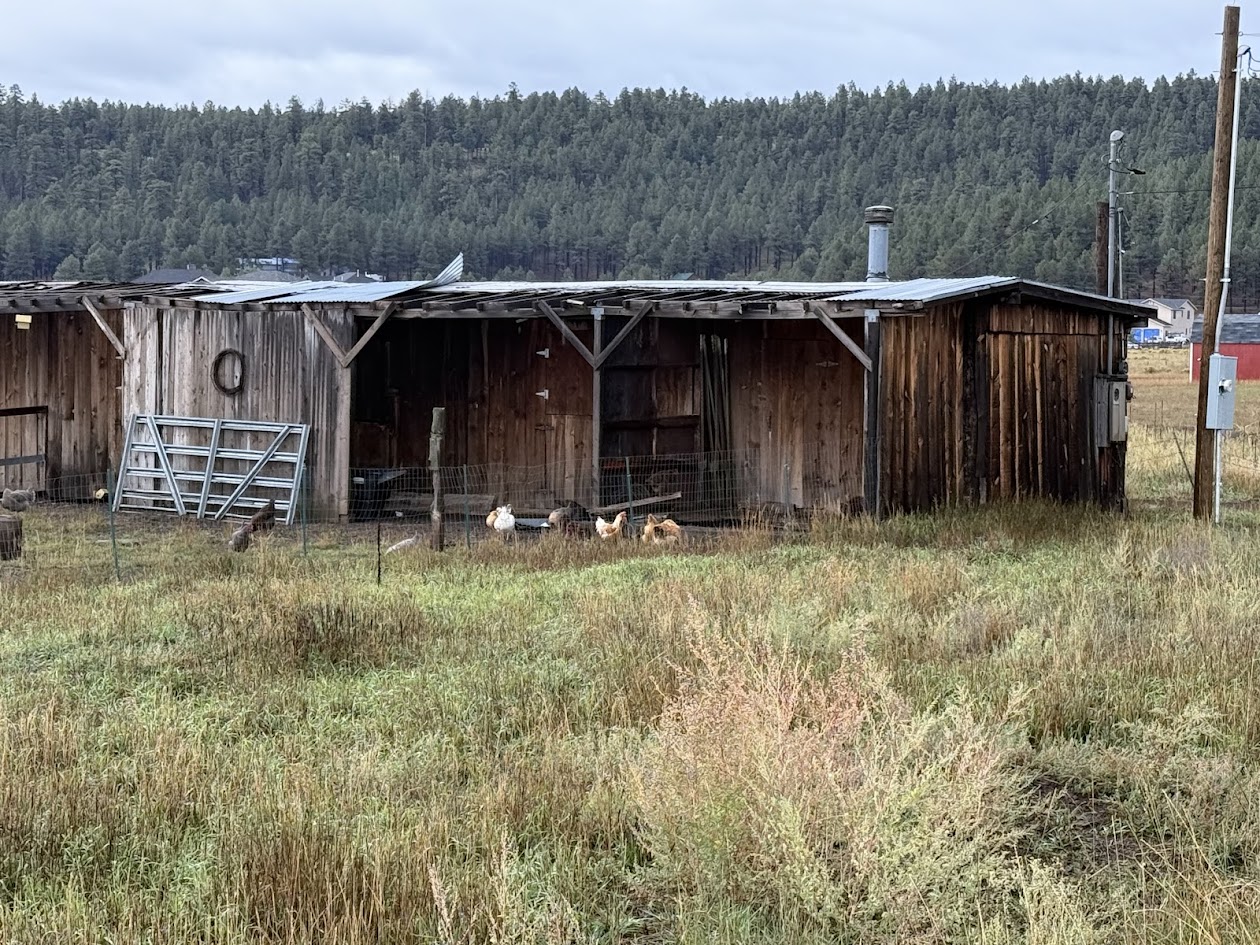
It’s clear that “Baderville,” as this area is known, has been inhabited for some time. This being Indigenous People’s Day, I acknowledge that, for a good long time, it was First Nations people who lived there, though I can’t be specific. Native Land Digital tells me that these inhabitants could have been Havasu, Hualapai, Hohokam, Hopitutskwa or Pueblo people. (Odds are that they were folks whose tribal name started with H.)
The historical evidence that remains, however, is from farmers and ranchers who lived here in the last century or two: a broken-down wagon, a split-rail fence, a chicken coop, and what AI identifies as an old brick oven.


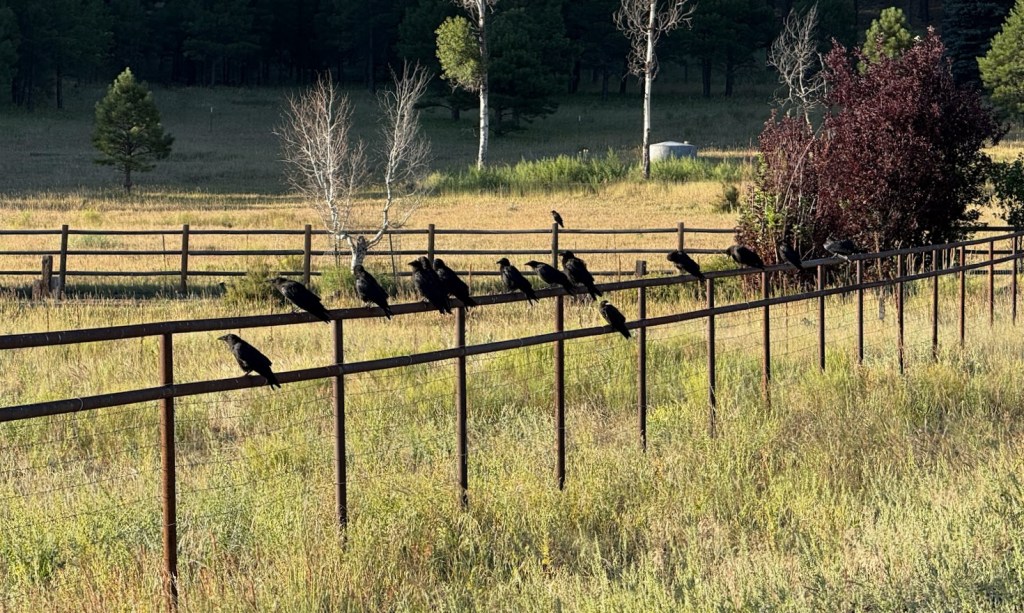
The houses on the prairie around Bader Rd are of varying ages and types. The red paint on this one reminds me of houses that color in Norway. We were told that red paint was cheap there because it was made from materials that were abundant and handy: fish oil and the iron-rich soil. People with more money made sure others knew it by painting their houses with the more expensive yellow or white paint. We call this house on Bader Rd the Raven Haven. How many can you count here? I get 14, but who really cares?
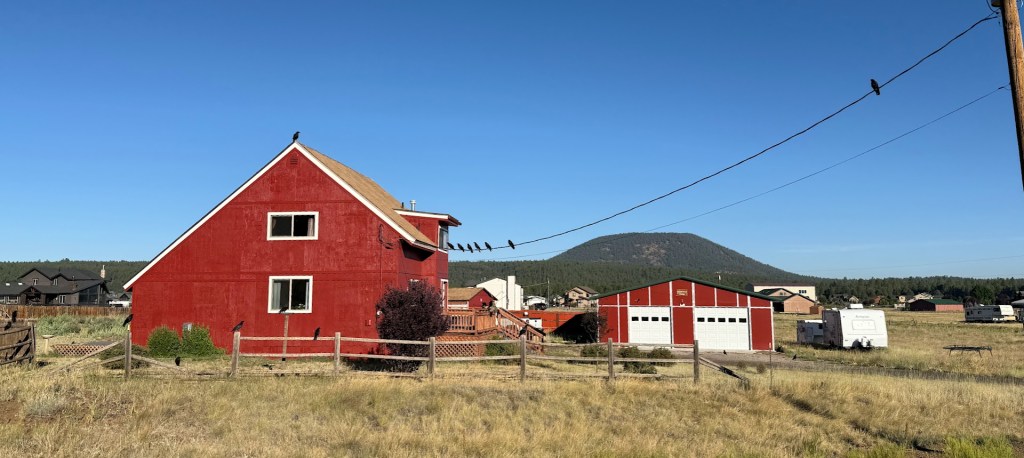
They even flock across the road:
This blue house with a copper roof is a visual treat — not an earth tone, but far from an eyesore:

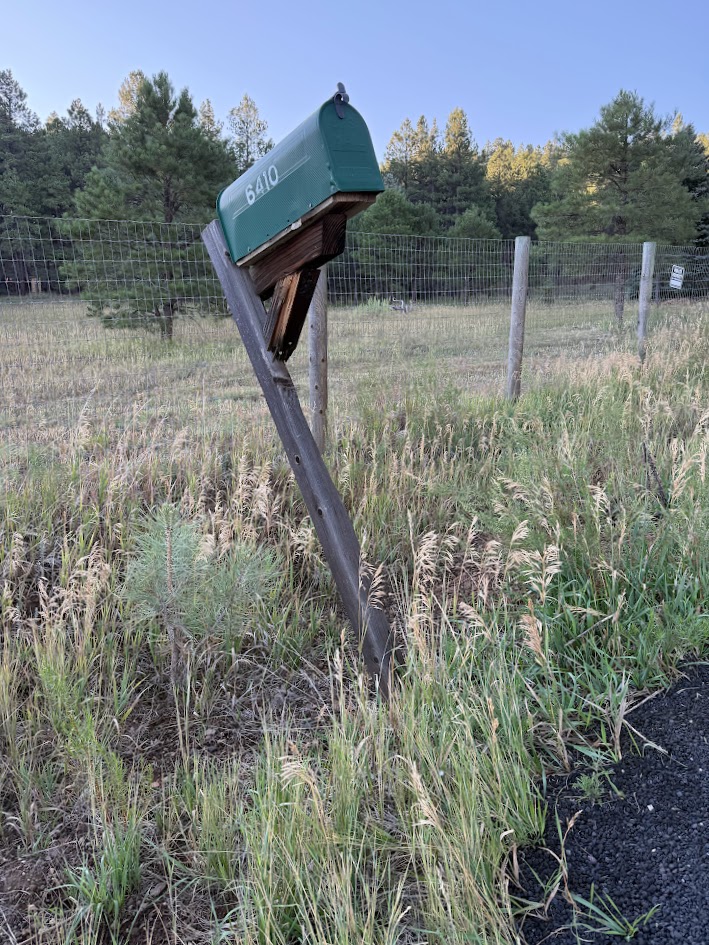
Mailboxes of all sorts — no HOA out here to dictate uniformity.



When we downsized in Phoenix, we moved into a gated community, something I never thought we’d do. But having invested in a bigger house up here, a place in Phoenix to “lock and leave” made sense. (For some reason, I kept telling friends that we needed a place we could “lock and load.” Uh-oh — now that I’ve remembered that, I’ll have to practice “lock and leave” until it sticks again.) The community prides itself on its “park-like” setting, and I decided I would learn the names of all the trees around us.
Being able to use words to identify and name things, feelings, situations and, well, everything, is important to me. When I was young, learning new information came rather easily, so I expected to enlarge my knowledge of tree names without much effort. Well, my mind has become more sluggish, less agile, and the brain cells that used to be like Velcro have turned into a very ineffectual adhesive, kind of like that mucilage stuff we had in school. It seemed only to stick paper to paper, but not for long. It did not age well, drying up and crusting over. Due to this inevitable decline in my mental abilities, it was only by endless repetition that I slowly expanded my list of known trees, and I will doubtless need to start over again when we get back to Phoenix.
On our walks, I notice so many different types of flowers, weeds and grasses. Using my PictureThis app, I started identifying plants, and as with the trees in Phoenix, the names would not stick at first. It helped that we walked daily, so I would say the names of the few I knew every time I saw them, trying to add one or two each day. I’m sure that I’ll need to start over next year. That thought could be discouraging, but Stoicism has taught me that there’s no fighting reality: my current brain in its current condition is all I have. So, like the birds (emus, I think?) we saw in a demonstration by trainers at a zoo one time, I will happily greet the Bader Rd plants as new acquaintances when I meet them again next year.
Hard to imagine who named these plants and why. Learning the names was one struggle; matching the names to the plants was another. Some of my favorite names:
- Dalmatian toadflax
- hoary verbena
- tansyleaf tansyaster
- red-thistle clammyweed (which is purple)
- lamb’s quarters
- blue grama
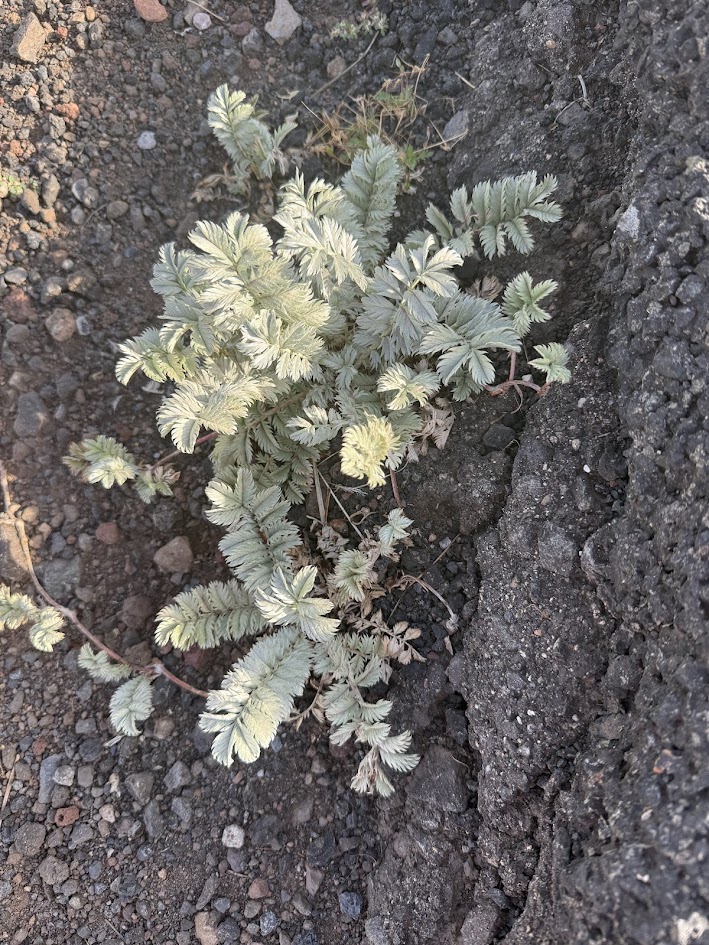
- Pennsylvania cinquefoil
- curlycup gumweed
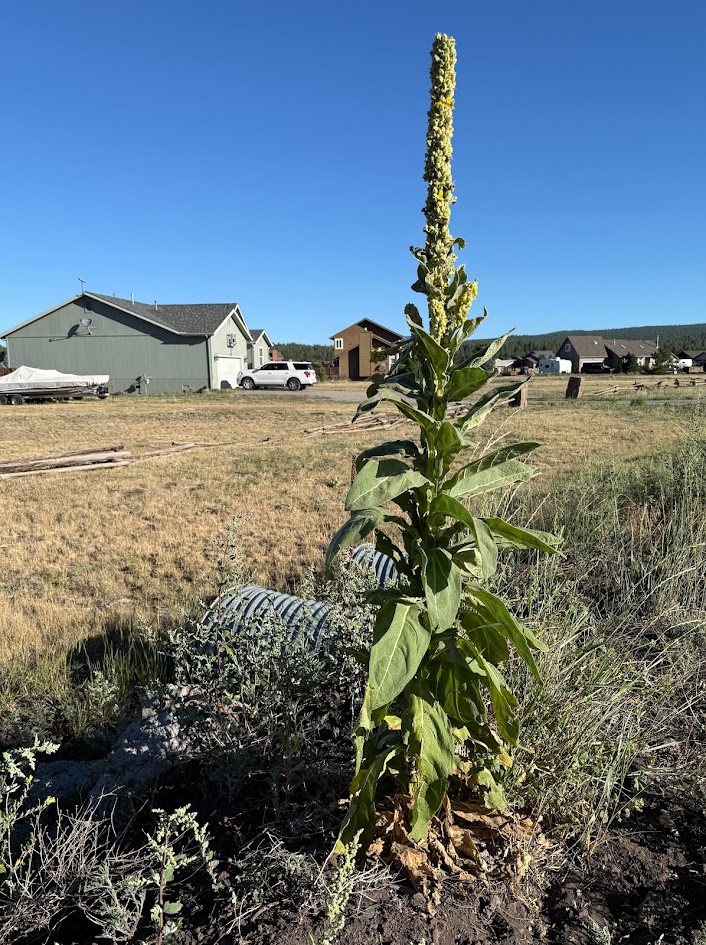
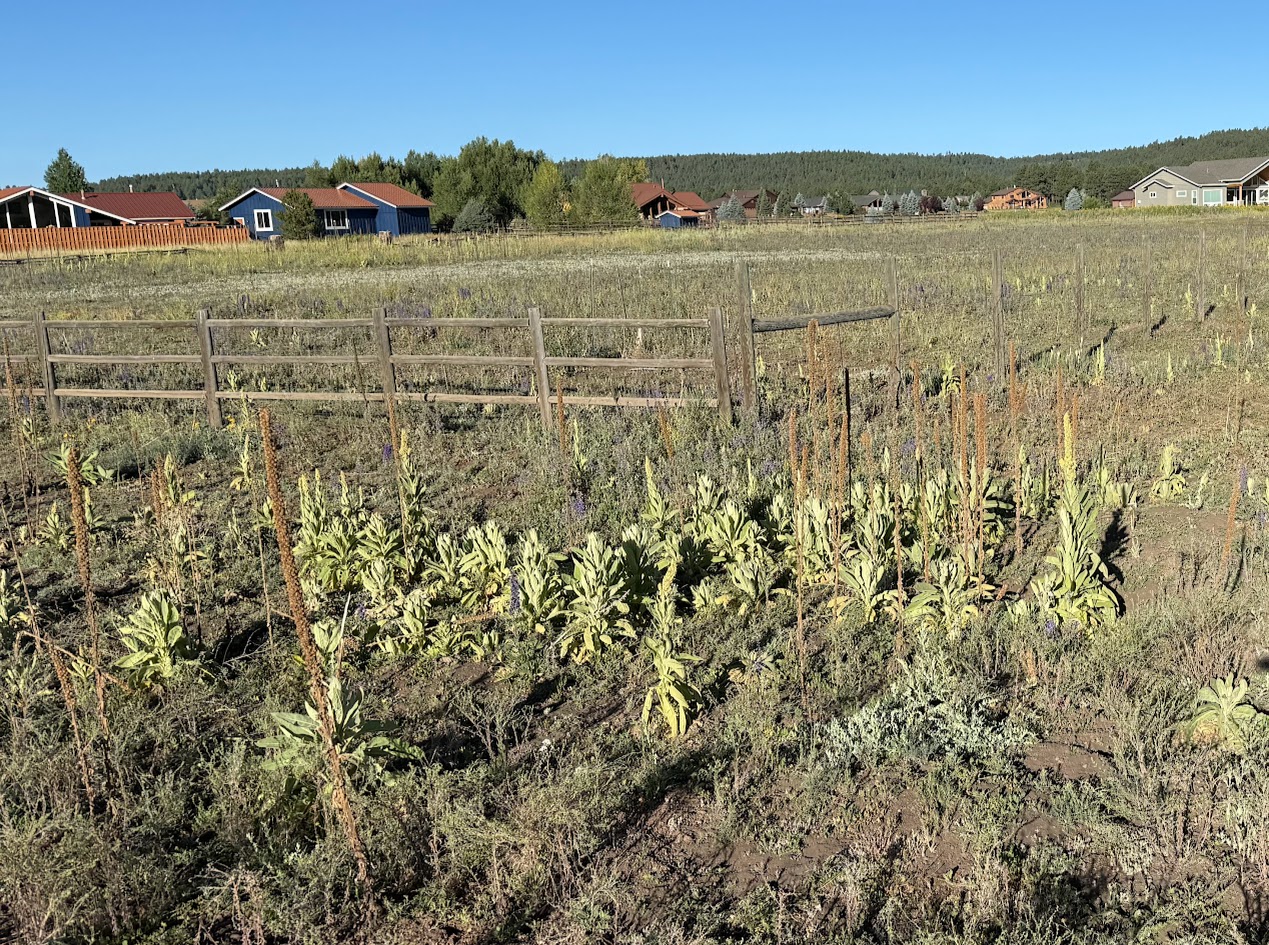
- common mullein
- silver burr ragweed
- smooth brome
- yellow sweet clover
- yellow sundrops
- Lindheimer’s bee blossom
- rubber rabbit brush
Rather than put a bunch of photos in a “tiled gallery,” I’m just going to let them be big. Time’s a-wastin’ — we’re leaving tomorrow and I can’t spend hours in formatting and captioning.
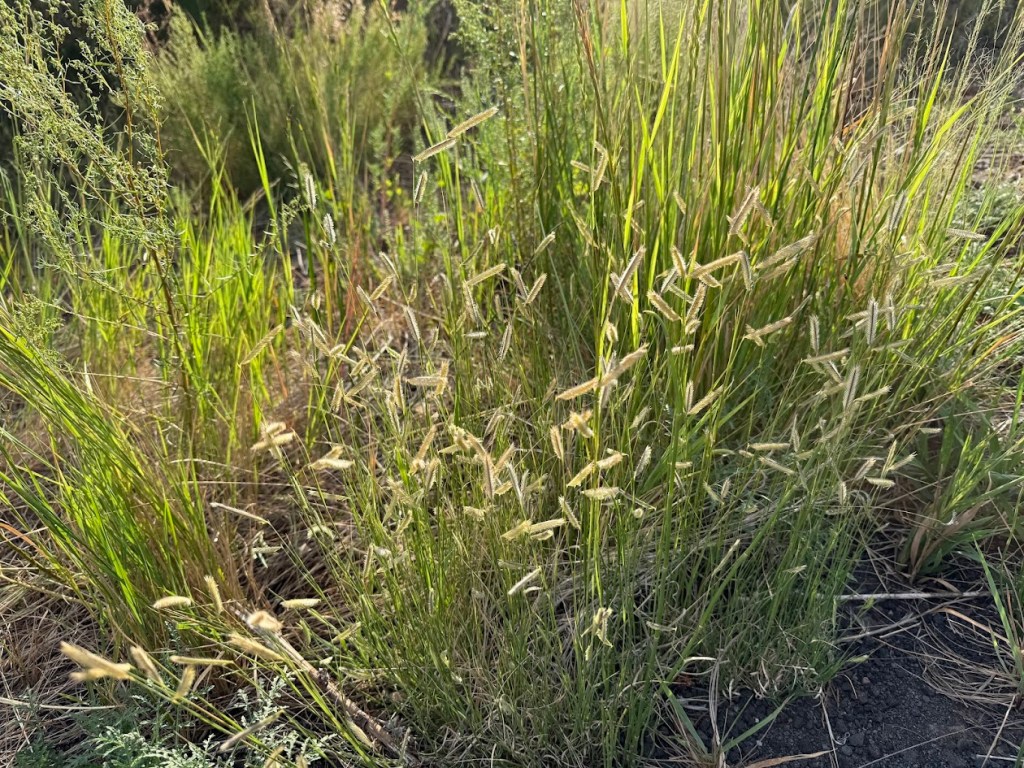
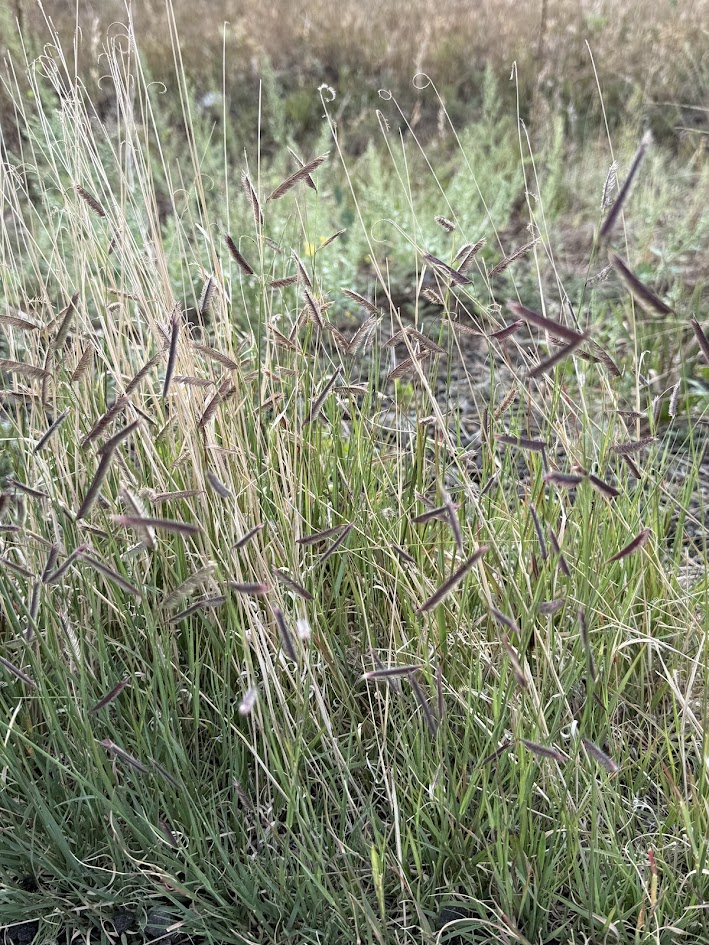
Blue grama grass – now available in two colors!
Tumbleweed baby and tumbleweed all grown-up, with nary a thought about becoming dry enough to tumble:
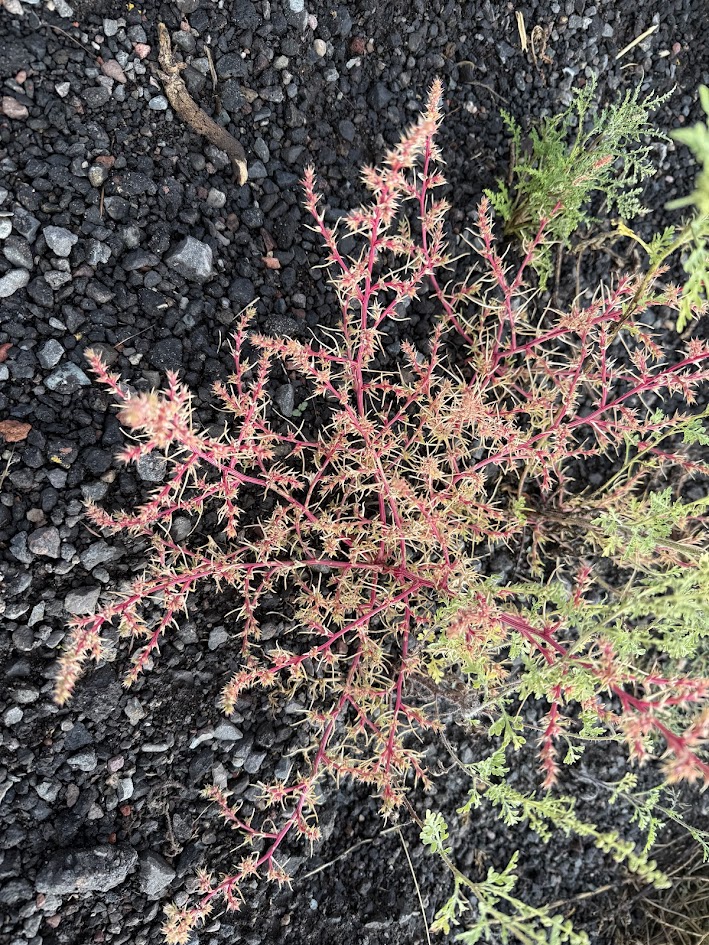
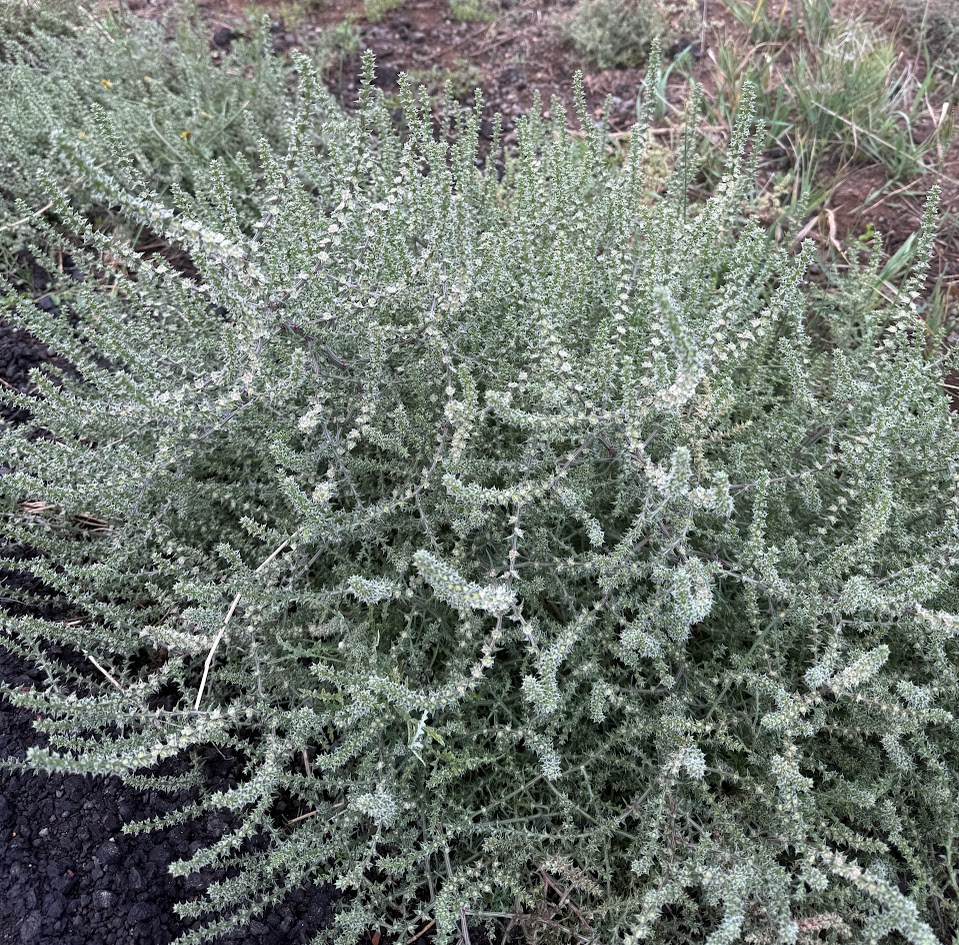
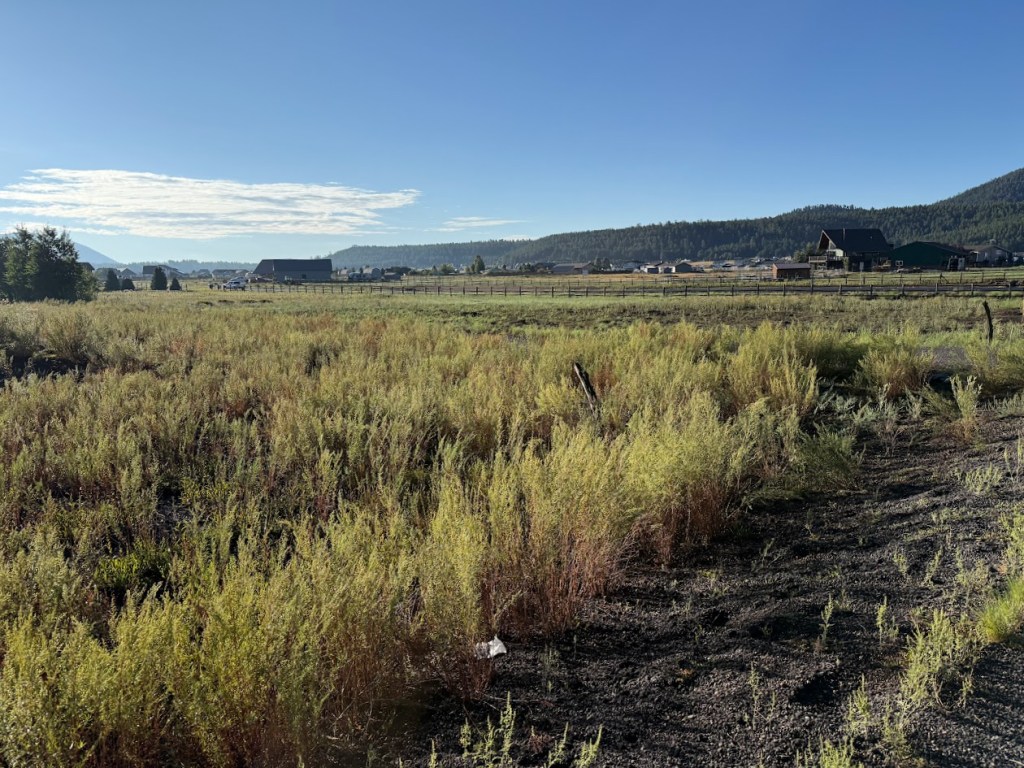
Whole fields of wild tarragon. AI tells me that it’s “a perennial herb with limited culinary use, characterized by a weaker, sometimes unpleasant flavor compared to its cultivated forms.” I have never used it in any form. If I ever need to, I’ll buy the good stuff even though this is plentiful around here.
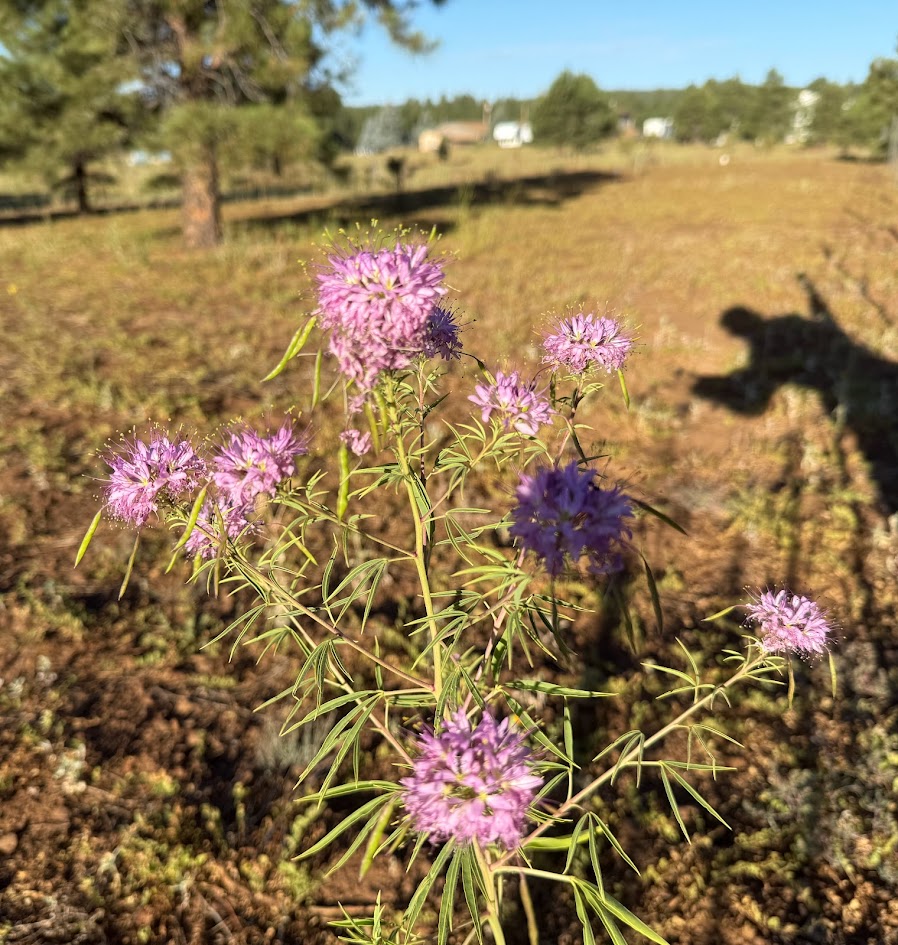
Red-thistle clammyweed, some against a wonderful sky:

One solo mullein, and a small forest of same:
Pennsylvania cinquefoil:
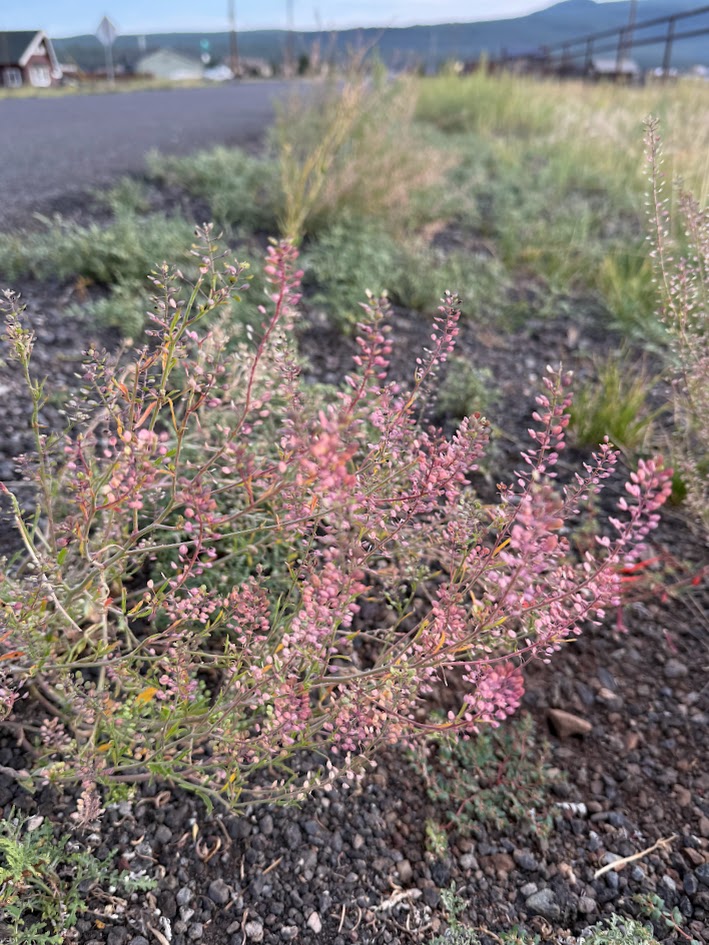
Virginia pepperweed:
Showy goldeneye:
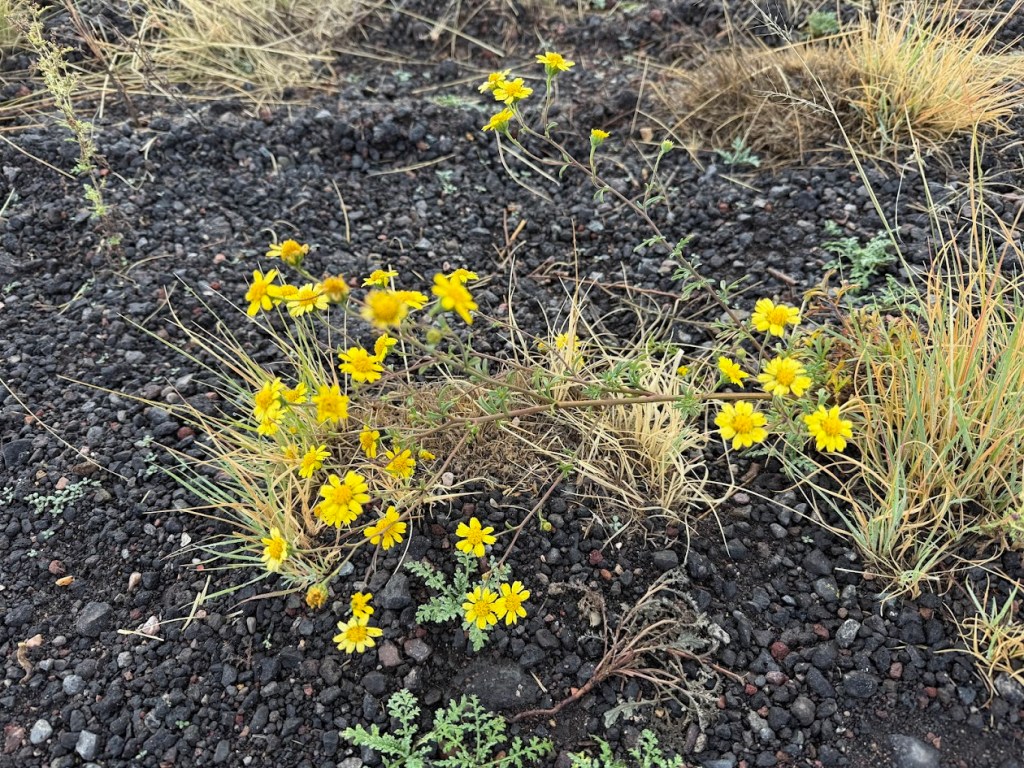
Lindheimer’s bee blossom, with a few curlycup gumweeds in the corner:
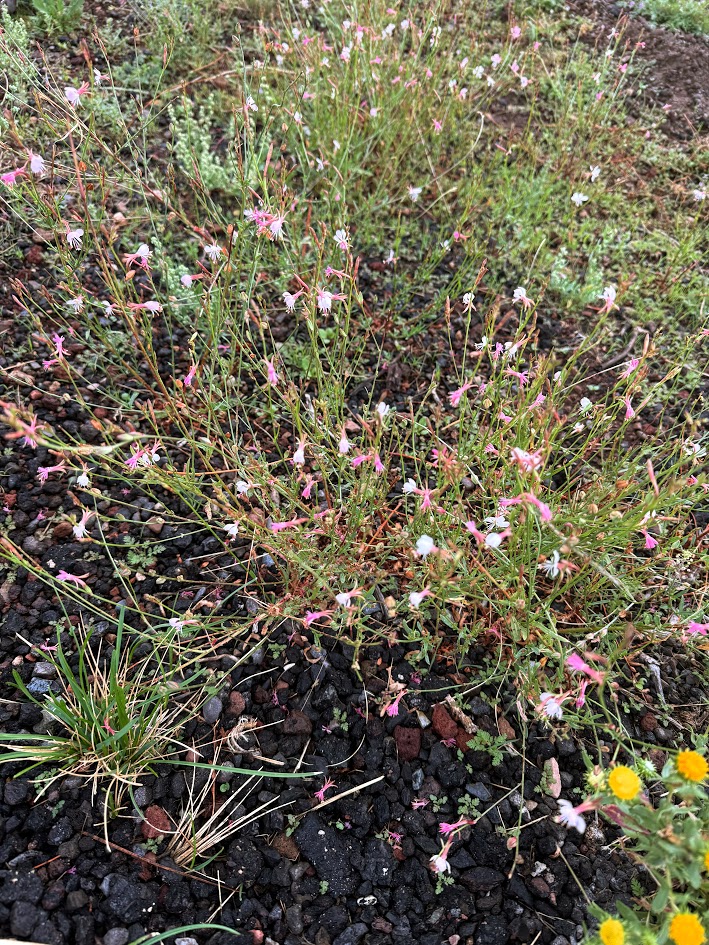
Hoary verbena — the purple flowers only appeared in September:
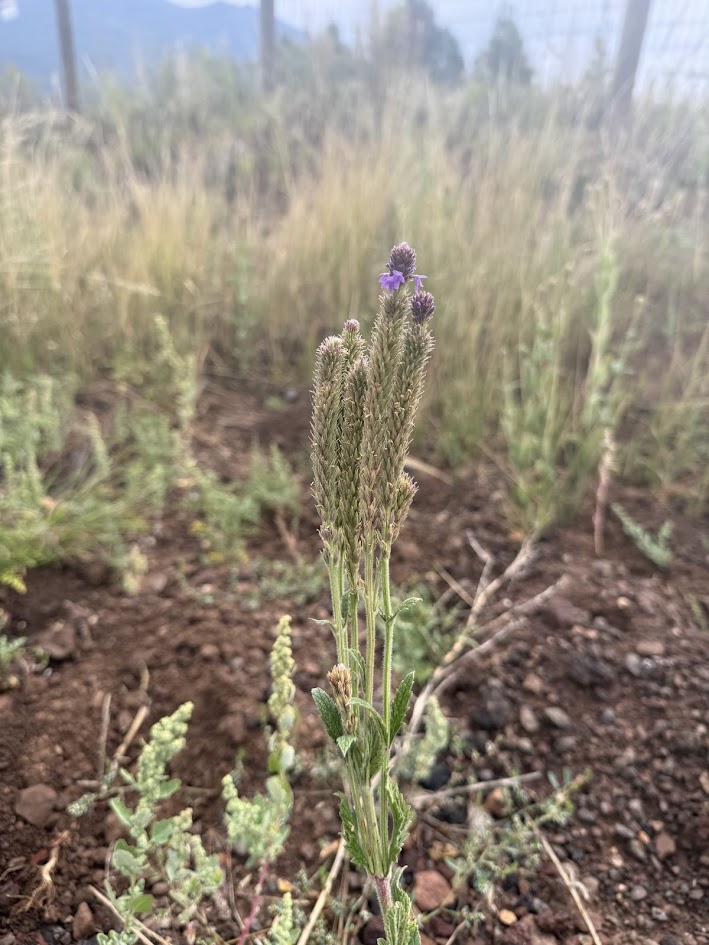
Yellow sundrops:

Weeping lovegrass:
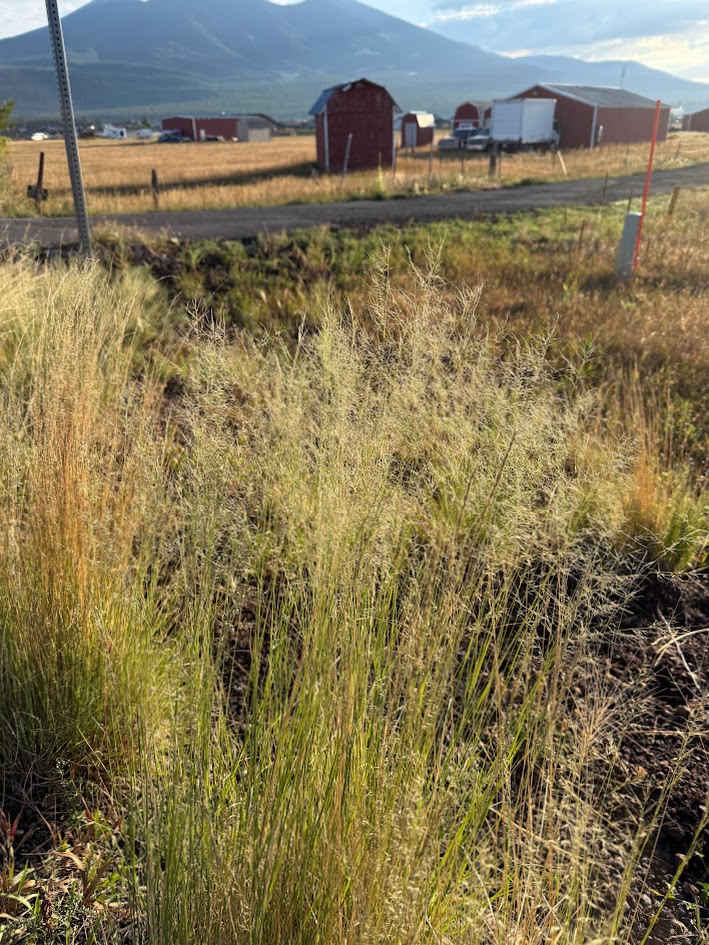
Lamb’s quarters in July with some tarragon behind, and in September, turning red:

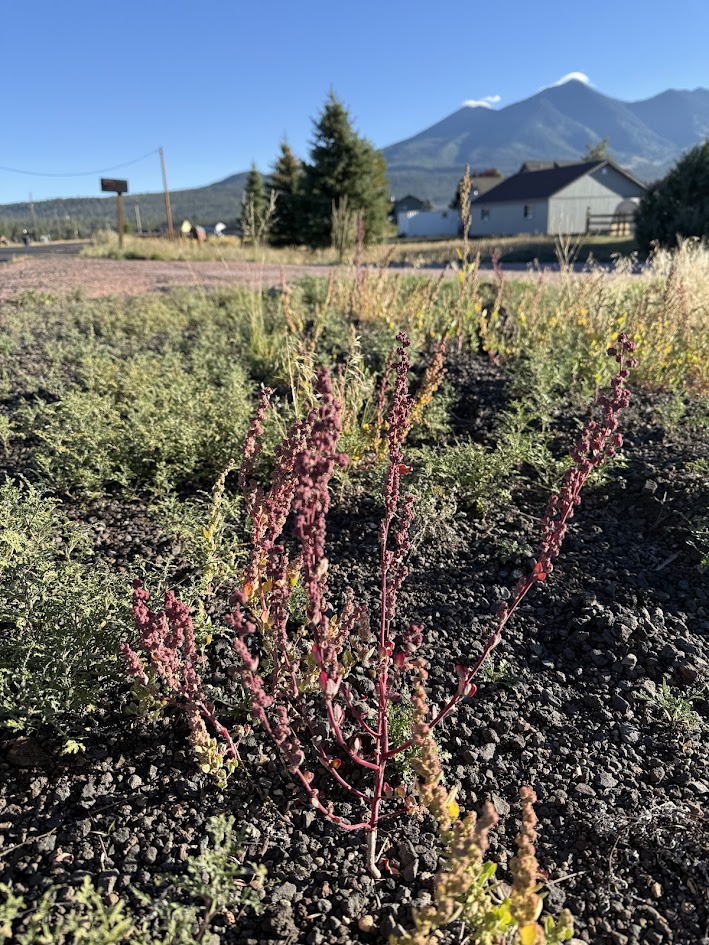
Tansyleaf tansyaster. Spell-check desperately wants to split the compound words.
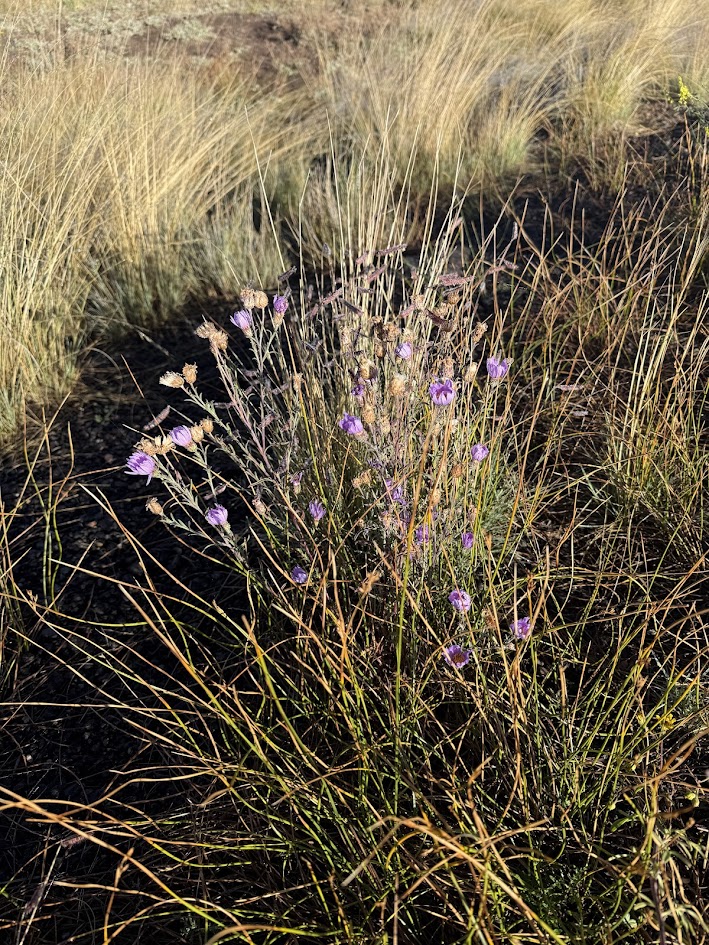
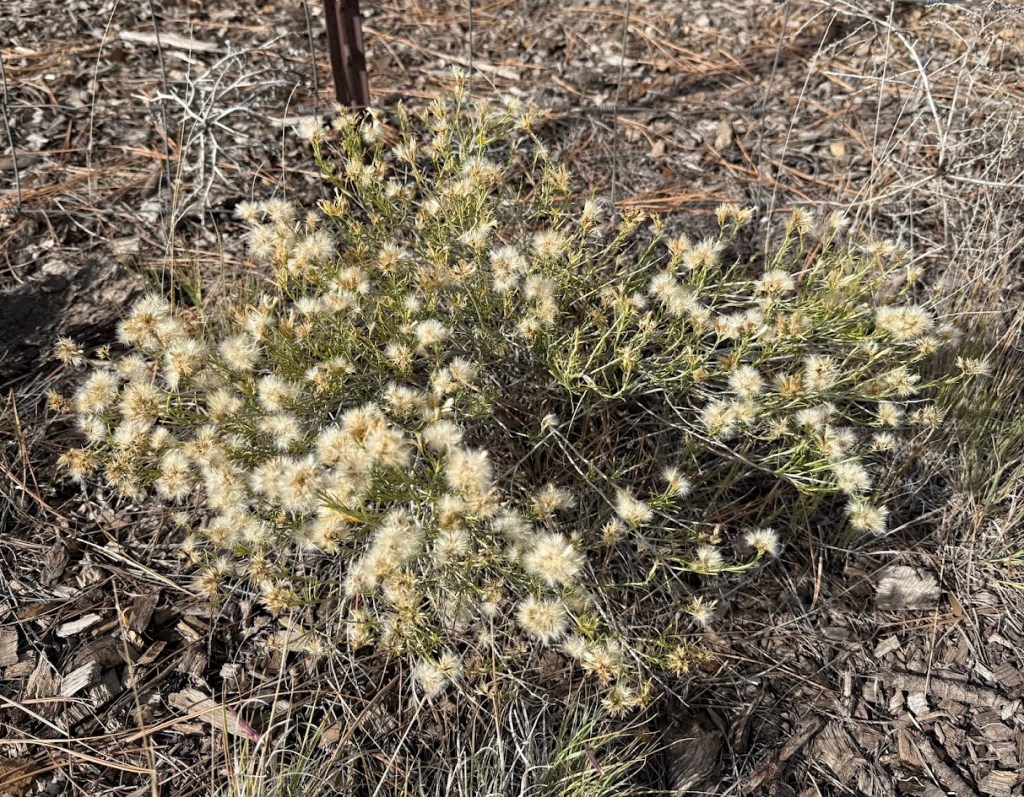
A field of rubber rabbit brush. Autumn has, since this photo, turned the yellow flowers to little wispy, white fuzz balls (below). This one is just outside our gate.
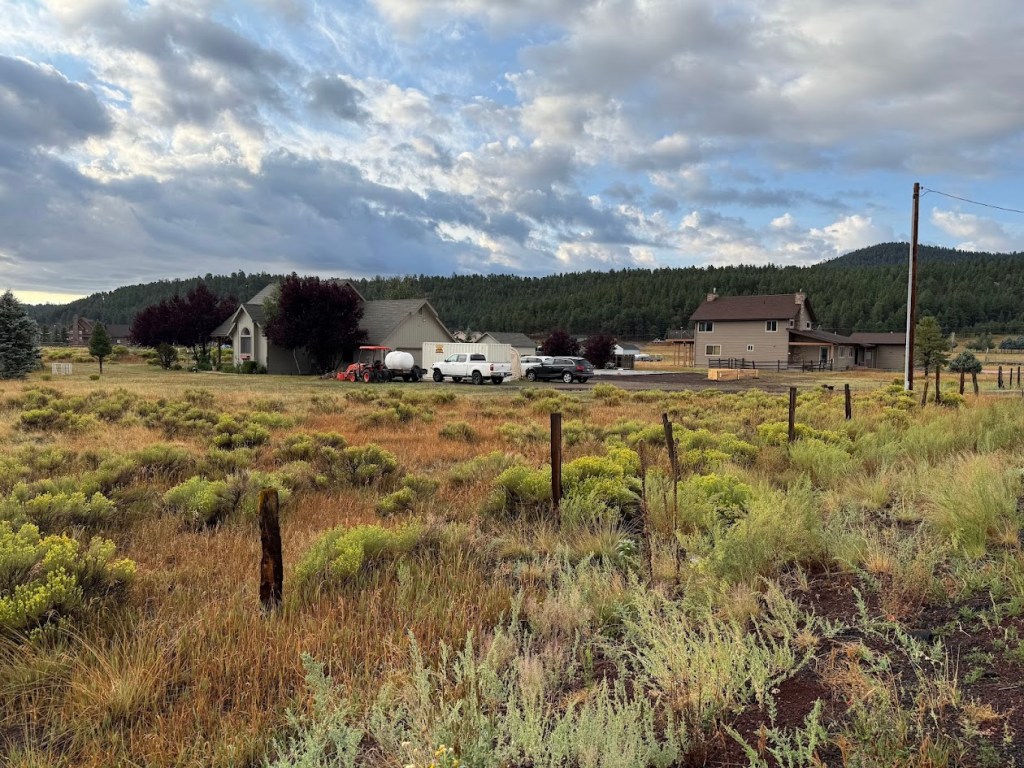
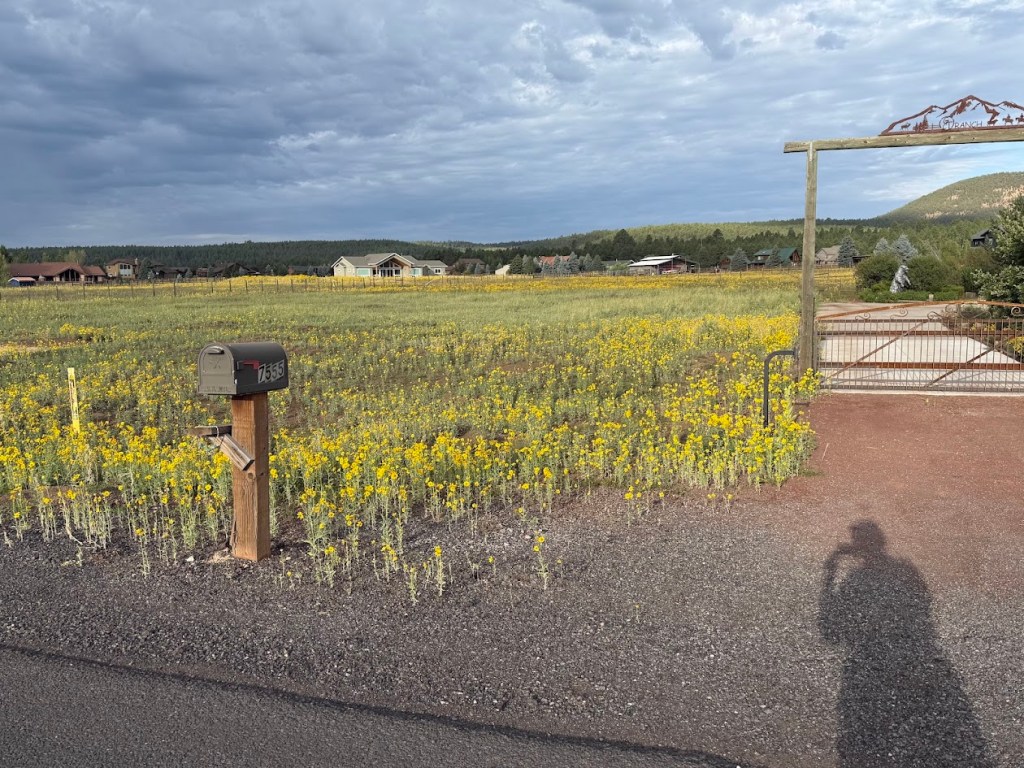
Three in one: a field of golden crownbeard, a bear statue (at the end of the driveway) and my shadow:
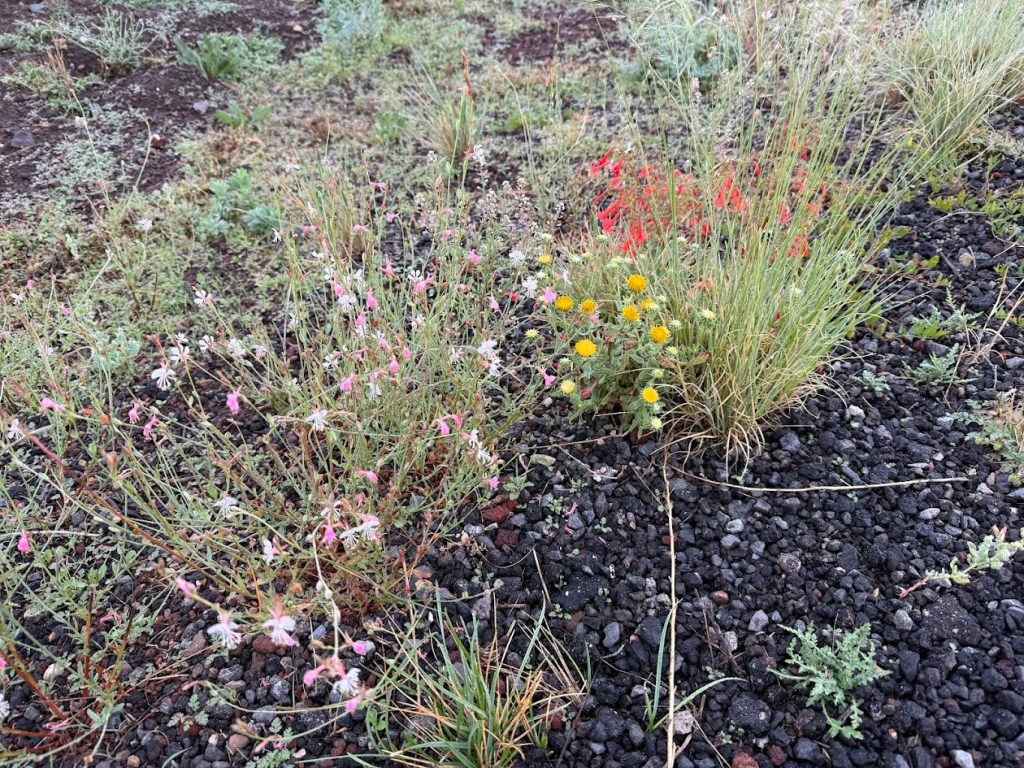
Side-by side: Lindheimer’s bee blossom, curlycup gumweed, and scarlet gilia:
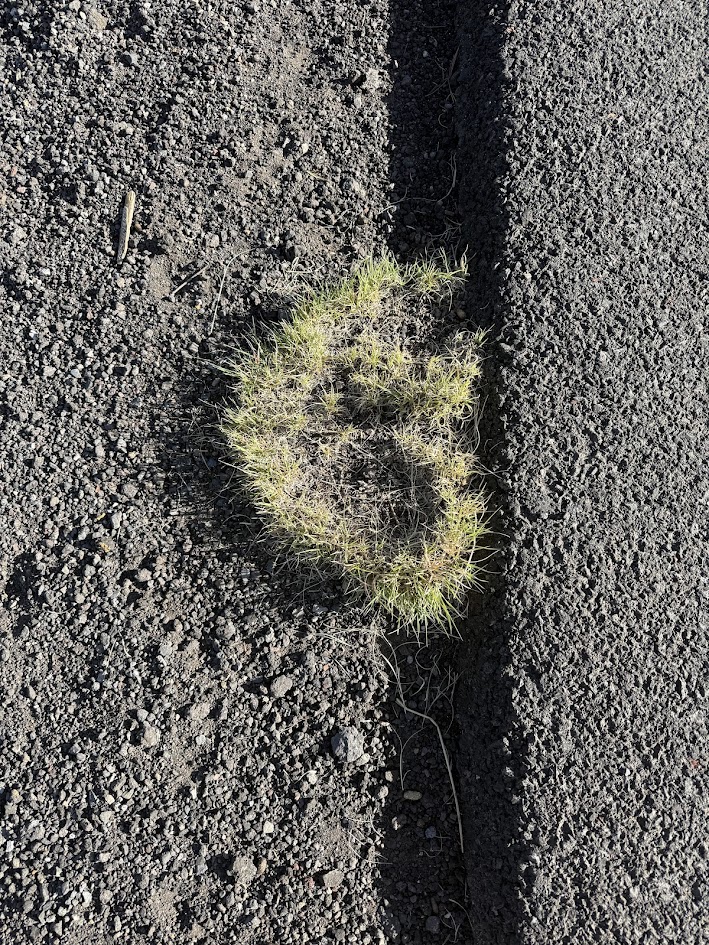
One last bit of flora. As miraculously happens everywhere, on Bader Rd, grass grows from asphalt and concrete cracks. I spotted this particular clump and it reminded me of a time when Sam was small — maybe three years old — and we were walking in a parking lot. He was talking a blue streak, but interrupted his ramble to point to a handicapped parking symbol, saying, “It’s trying to be a G.” This heroic clump is doing the same.
Other than the ravens, I’ve shown you far more flora than fauna. One last photo before I stop writing and go pack: a little prairie dog.

I loved Uncle Wiggily stories when I was a little kid. They always ended with a sentence that previewed the next story in the book. An example: “And if the puppy dog doesn’t waggle his tail so hard that he knocks over the milk bottle when it’s trying to slide down the doormat, I shall have the pleasure, next, of telling you the story of Uncle Wiggily and the freckled girl.” Let me give it a try:
And if the I-17 doesn’t shut down due to a road accident, a brush fire or a sudden monsoon, I shall have the pleasure, next, of writing again from Phoenix to tell you all about what has eclipsed jigsaw puzzles as my primary source of pleasure.
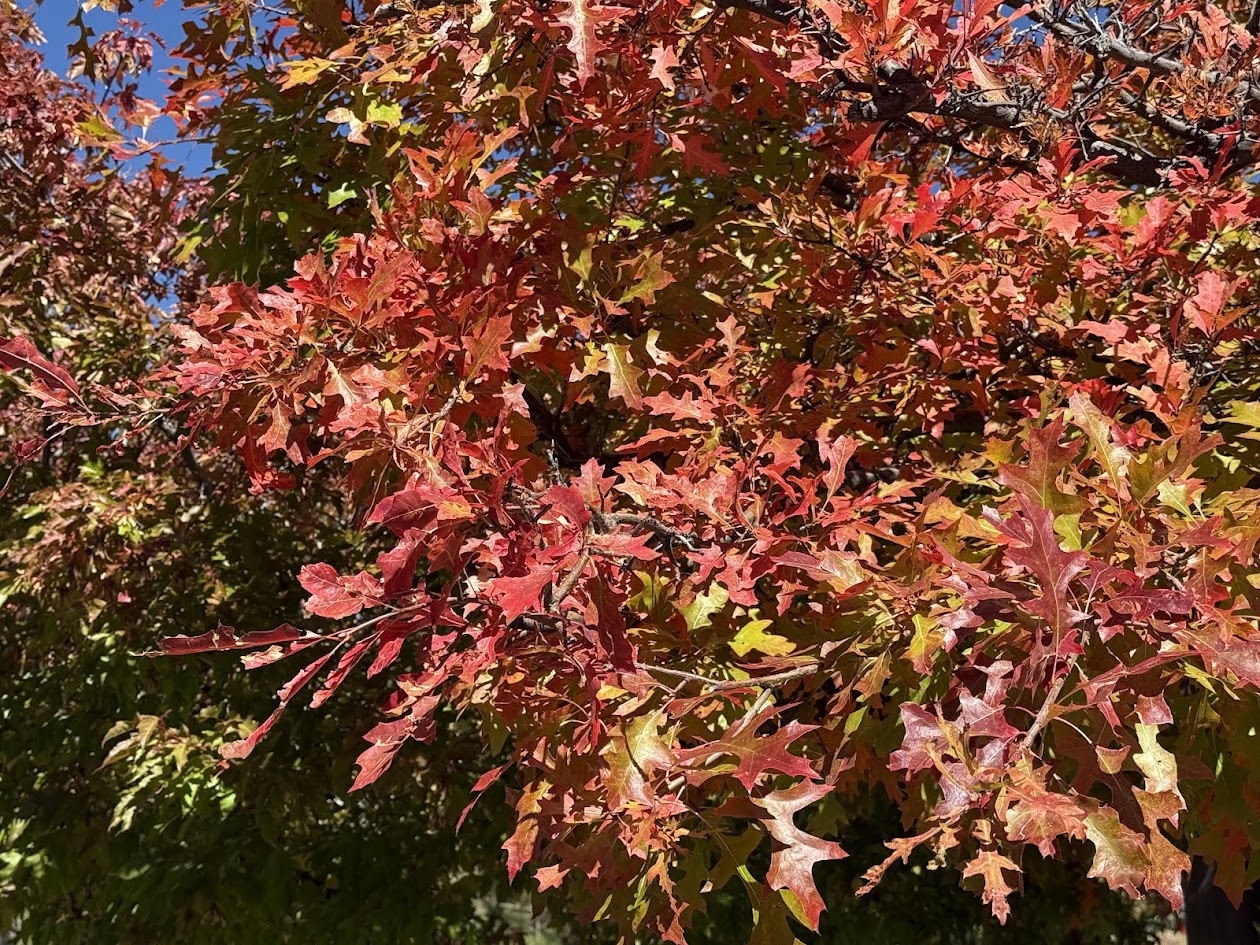
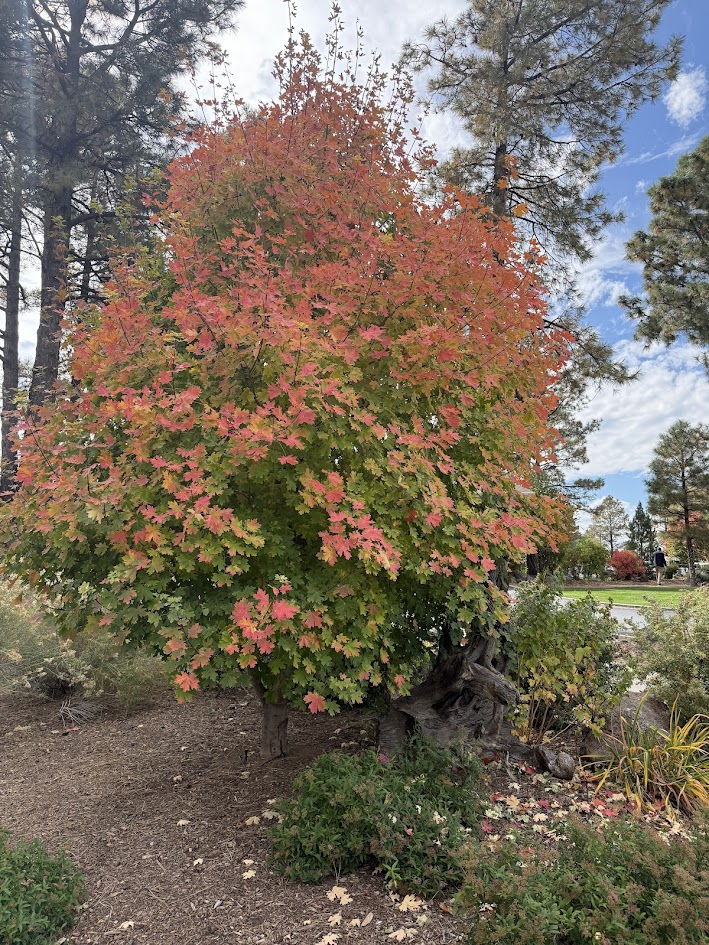
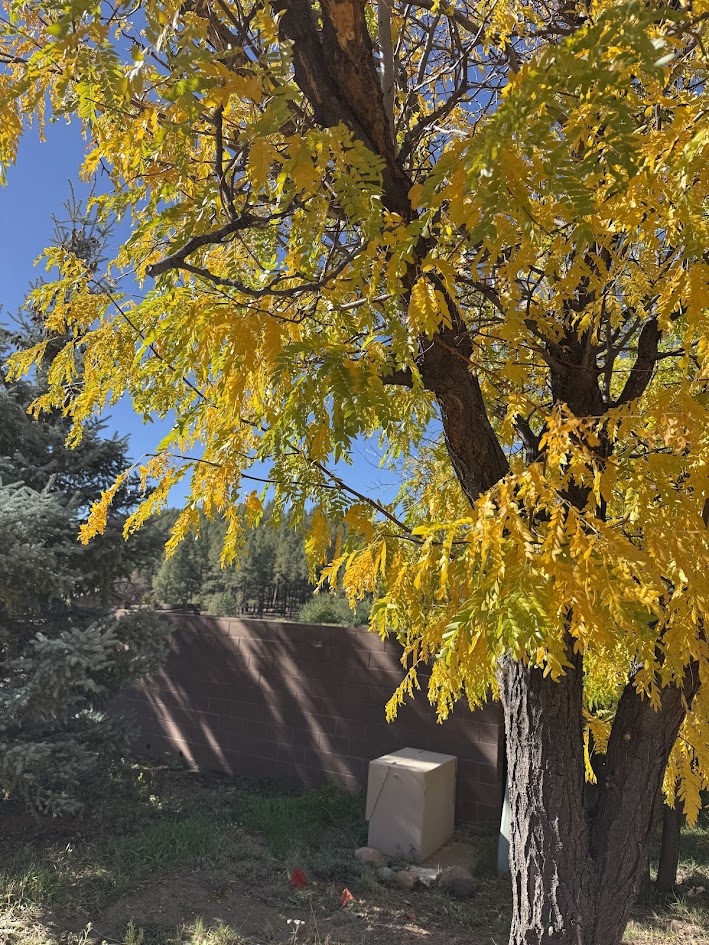
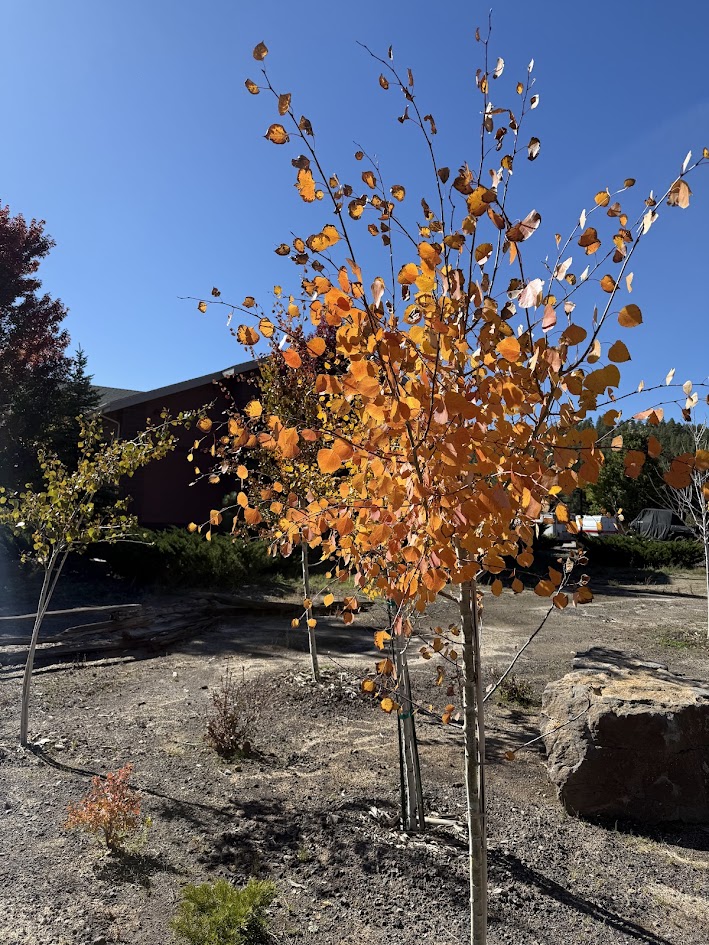
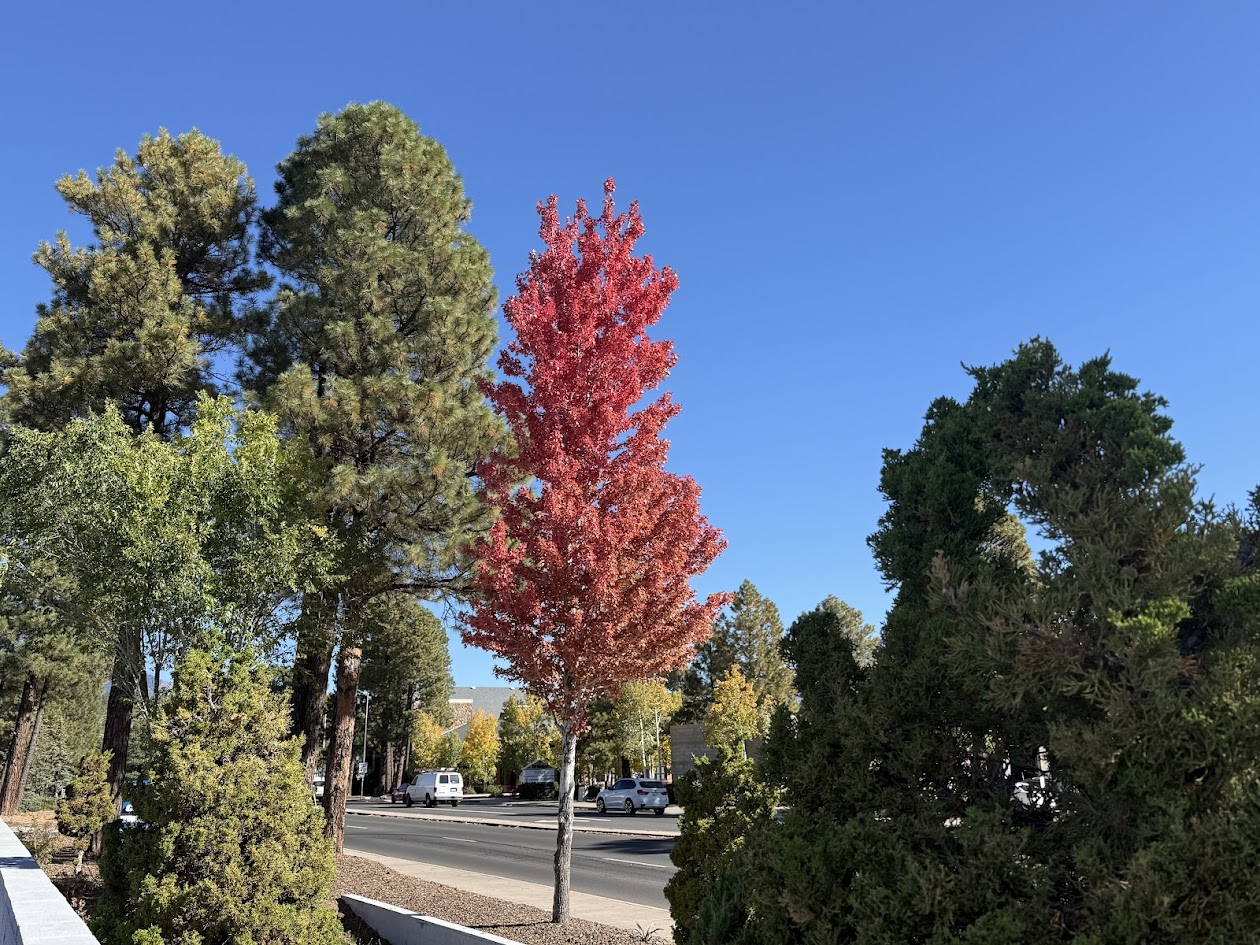
Bonus – fall colors!
This is especially for my Phoenix friends, who don’t see much change as autumn comes on. In case you aren’t aware, though, the two huge trees in front of Temple Beth El, around 12th Avenue and Glendale on the north side, turn wonderfully red and orange, usually not until mid-November. And then only for what seems like a few days. Easy to miss.


 itsjustapuzzle.com
Thank you for these lovely thoughts about Bader Road. I feel as if I’ve just walked it with you and Richard (as I did this summer). I was delighted to see the ravens still possessing their territory, and it was fun to again imagine the grumpy guy at the end of the road. The pictures are of the native plants (and critters) are wonderful – I so appreciate your taking the time to share. S
LikeLike
I love you, Susan, and love that you took that walk with us!
LikeLike
Such beautiful photos, Susan! Thanks for sharing them with us. Flagstaff is gorgeous.
LikeLike